Sunday, February 22, 2026

Psychotherapy, neuroscience, and honesty

 Recently, "polyvagal theory" blew up in my social media feed. I think Meta's algorithms have changed lately ... seems like nowadays, you only have to watch through one video from beginning to end to get positively drowned in new videos and texts on the same topic. America's Next Top Model is all over my feed too, after I watched through one video about it ... But this polyvagal thing turned into a real rabbit hole I dived into. I don't have any special relationship to Top Model, but therapy is of personal interest.

Below, I explain why. But if you're not particularly interested in me as a person or my personal life story, you can skip the "personal background" bit and jump straight to section 2, "neuroscience in therapy and polyvagal theory". 

1. Personal background 

Some background for new readers who don't already know this: I was a psychiatric patient, on-off, for over twenty years. And I might be one again, in the future, but for the last eight years, I've managed - sometimes barely, but still managed - without professional mental health services. However, I know several psychiatrists from work, and sometimes ask them for advice, so ... I'm not technically a psychiatric patient anymore, but I'm also not without psychiatrists in my life.
I have always been a psychosis patient, but never precisely diagnosed: the closest I ever got was "probably on the schizo-spectrum, but doesn't tick enough boxes for schizophrenia." 

I've had many pill-prescribing psychiatrists over the years. One of them was also a great listener, even though we didn't have proper psychotherapy sessions or anything (for those of you who have read my novel, Kugghjulssjälar/Cogwheel Souls: Teofil Strand is based on him, even though he gradually departed from the real person and became his own character during the writing process). I could talk to him about everything, and it was really helpful to have that relationship, even though it wasn't actual psychotherapy.
Many psychiatrists over the years, but only three psychologists. I will describe them below.


1. When I first became a patient, I was immediately assigned a psychiatrist for pills and a psychologist for talk. Hard to believe nowadays, but back in the nineties, we still had a proper welfare state, and this was normal public health care! She was psychodynamically trained, and said I would probably improve in the long run from psychodynamic therapy. But first, she said, I would likely get worse, so I would need heavier medication to prevent another psychotic break when therapy stirred things up. This didn't seem appealing to me, so I declined.

2. Many years later, in 2015 or thereabouts, I was a patient at the horribly shitty Capio mental health services in Haninge. 
Psychiatrist sidenote: 
This was after Sweden completely opened the doors for big-time capitalists to start schools, health services, any sort of welfare services really. They'd be entitled to loads of taxpayer money with almost no oversight on how they spent it, nothing preventing them from running things as cheaply as possible and pocketing the rest. Completely legal to do this. (This is still the welfare system we have.) In Swedish, this place was called "Capio hjärnhälsan" which is a horrible but untranslatable pun on "brain health" and "iron health/great health". I was bounced between different psychiatrists there, I don't know if they had much in the way of permanent staff at all, and when I angrily complained that I wanted to see the same person instead of constantly telling new people about my symptoms, they saddled me with the worst psychiatrist I've ever had. 
By then, I was out of energy and didn't complain anymore, I just kept seeing this guy who called me by the wrong name every single time ("Hello, Matilda", "I'm Sofia, Matilda is just my middle name", "Ah, well, lots of people go by their middle names" every single time). He also had no memory of what meds I was supposed to have, and his patient records seemed to be in a constant state of disarray, so I just told him what to prescribe ... I knew I had a benzo problem (but didn't know what to do about it, since popping benzo was all I could do at the time to keep my nose above water) months before he realized, with a shocked look, that he had been prescribing me quite a lot of the stuff. 
Back to psychologists: At one point, 2015 or thereabouts, I told this bottom-of-the-barrel psychiatrist that perhaps I should have some talk therapy too. He went "oh, you don't? Well, perhaps you should. I'll arrange this for you." And then I got to see some sort of therapist - not sure if she was even a psychologist, but she allegedly (I'm using italics for a reason) was trained in CBT - who immediately told me she didn't know anything about psychosis. Well, off to a good start! She then said we should do mindfulness exercises, because that's good for everything. I'm normally not very attuned to my body (more about this later), but she said I should close my eyes and just focus on my breathing and how the weight of my buttocks and thighs feel against the chair. I complied and pointed my consciousness downwards through my lungs and butt-and-thigh-muscles and I could suddenly feel all the blood vessels in there and all the electricity going up and down nerves that run like threads through the muscles and it was so creepy that I almost screamed and then laughed hysterically and said I don't want to do mindfulness anymore! Psychologist stared at me and said ok, then we'll make daily schedules instead. Daily schedules are good. 
I became near-manic about making daily schedules and following them for a few weeks and thought they helped with everything and then I had a sort of semi-crash and stopped. 
Later, I learnt from a clinical psychologist I know privately that traditional, standardized mindfulness exercises can trigger a new psychotic episode in people who already have psychosis issues, so you should absolutely not do mindfulness with psychosis patients unless you're an expert on this particular topic. But then again, the "therapist" did say she didn't know anything about psychosis, so it's unsurprising she didn't know this either. 

3.  In 2019, I was pretty high functioning and okay-ish but thought, for various reasons, that I needed some talk therapy. Since the horrible so-called therapist described above allegedly was trained in CBT, I absolutely did not want another CBTer. But other types of therapists were hard to find. Seems like almost everyone, nowadays, just offer "CBT and job training". Eventually, I found the Saint Lukas Foundation, emailed them, explained my issues and said that I will not, at this time, go back on meds, and I do not want to do CBT - I want some serious fucking Freud shit! I wanna talk at length about my childhood! 
I got to see a psychodynamic therapist, who was hugely helpful. In the end, we probably didn't do "serious fucking Freud shit" (although I did get to talk about my childhood). Perhaps we didn't do anything that I couldn't have done with a proper CBT therapist as well. Swedish psychologist Tania Suhinina has written a series of Swedish-language social media posts about how CBT is supposed to be practiced - which differs a lot from how it's usually practiced in today's often shitty public health care system. Anyway. The therapy I got was really helpful, and it was all about psychology and emotions, no neuroscience at all. 

Freud Memes and Images - Imgur 

After this lengthy personal background, I will return to the topic of therapists who think they need to tell their patients neuroscience stories.  

2. Neuroscience in therapy and polyvagal theory

So, none of my psychologists have talked about polyvagal theory. However, I also teach psychologists and psychiatrists from time to time, in the philosophy of psychiatry, and in these contexts, students sometimes bring up stuff like "the body keeps the score" and polyvagal. So, I felt like I had to learn at least a little bit about this physiology-psychology stuff, but very little knowledge sufficed to set it aside again. In a short course, or a single theme day, on philosophy of psychiatry, you gotta leave out a lot and focus on the most crucial stuff. I already talk about mind/body stuff on a more general level and try to correct important and common misunderstandings; going into specific theories - that I don't even have the expertise to evaluate - would push out philosophy I really want to include. 

Anyway. Recently, polyvagal theory - and, more specifically, therapists saying that it's been debunked now, once and for all, so where do we go from here? - blew up in my social media feed. Others said it's been debunked long ago, it's just suddenly getting more attention. This is a long blog post from 2022, by Alyssa Luck, that several people have recommended to me as a good overview of polyvagal theory and biological claims of the theory that are demonstrably false. Luck isn't a neuroscientist herself, she's a nutritional scientist and science writer, but she conscientiously links to all the science papers she refers to in the post.

Luck also talks about why many therapists get so defensive around polyvagal theory. They've given their patients various exercises that were clearly helpful for them, and polyvagal was supposed to explain why it was helpful. If polyvagal is a bunch of pseudoscience, can we still do the exercises? Or can we prop them up with some other theory instead?

Luck quotes clinician Andrew Cook, from an online discussion of polyvagal theory and psychosomatic researcher Paul Grossman's critique of it. Cook writes: 

"Having applied and adapted PVT for the past 15 years within the context of a bodywork practice and Pat Ogden’s Sensorimotor approach, I must admit that I don’t use most of the scientific core of PVT. Instead, I find that neuroception along with a generic division of human behaviour into three zones (1) fight flight/ sympathetically dominated, (2) normal range, and (3) parasympathetically dominated – is the most useful part. I agree that it’s mythological, and that is a problem. I have actually seen people get a lot of benefit, and then abandon what they found experientially useful because some asshole who read an article they only half understood told them that it wasn’t scientifically valid."

Luck talks a lot in the blog post about how it's natural for humans to want explanations of why something work, we don't like to be told "well, it does work, we're just not sure why". I think this is right. But what if the truth is that we're uncertain why something works? What if the truth is that 
- we have pretty good evidence that this does work for a lot of people
- but we really don't know why?

Shouldn't we just tell it like it is, then? Instead of coming up with "myths"?

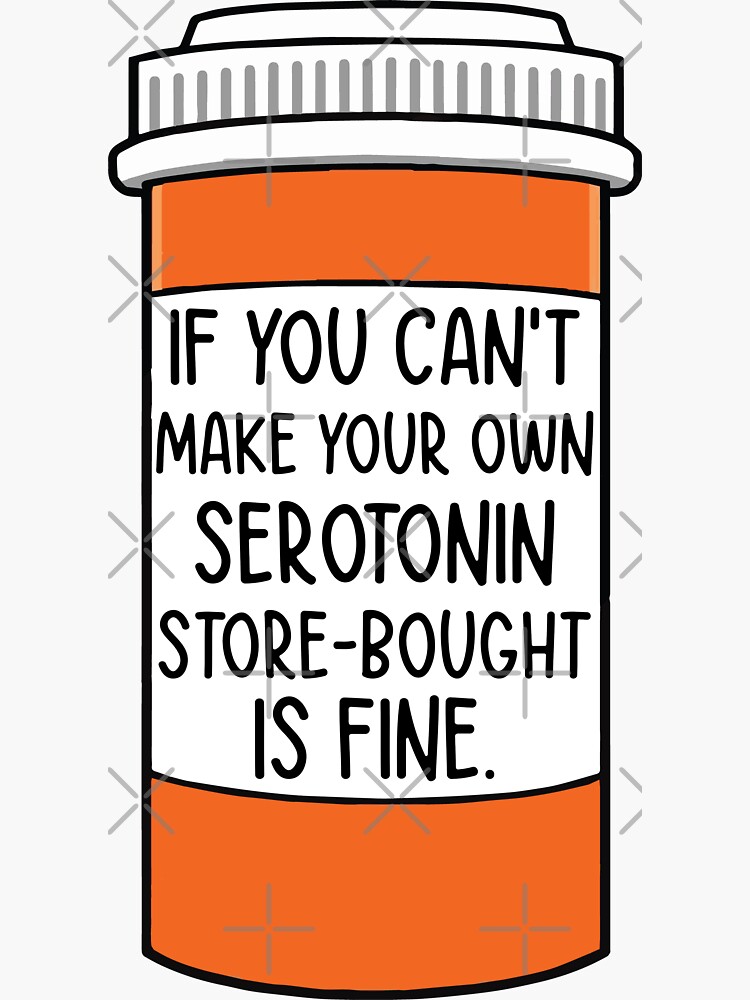
This strongly reminds me of depression and SSRIs, and the false explanation according to which people with depression have a serotonin deficit, and SSRIs work by increasing serotonin to normal levels. "Just like diabetics need insulin, depressed people need antidepressants", "if you can't make your own serotonin, store bought is fine", etc., there are a million memes like this one.

 if you can't make your own serotonin store-bought is fine Sticker

 Now, depression might, at least in a subset of patients, have something to do with serotonin, but the crude explanation above is almost certainly false. And when this falsity became more widely known, lots of depression patients who had been told this lie by clinicians felt deceived and betrayed. And then some clinicians said that this was obviously not meant to be taken literally, it was just a helpful story, a metaphor or myth. You even saw people victim-blaming their patients, suggesting that they should have understood that the simple neurotransmitter explanation wasn't supposed to be taken literally.

Look. When my very first psychiatrist prescribed me my very first antipsychotic pills (I think it was Fluanxol), I asked my very first psychologist - because she was the one I really talked to, and asked questions of - how antipsychotics work in the brain. The brain is such a big, complicated mess, thoughts and perceptions and emotions and all that stuff is also such a big, complicated mess - how can a pill possibly target the psychotic stuff only? The psychologist said it doesn't. She said treating psychosis with antipsychotics is more like hunting sparrows with a bazooka; you hope to kill some birds without tearing down too much of the forest. 
There are two things to say about the sparrow-bazooka metaphor here: First, it's obviously just a metaphor. Obviously, I don't have a literal forest with literal trees and literal sparrows flying around inside my brain. Second, it's blunt and honest. Did I feel disappointed at not getting a concrete, detailed, and reassuring neuroscience story about how the pills work? Yes, of course I did! Luck is 100% right when she says that people want to know why something works, not just that it often works and thus is worth trying. But at the same time, I truly appreciated my psychologist's blunt honesty.
When I first became a psych patient, I was pretty paranoid. Mostly about demon assassins, but also about clinicians. I suspected that they might still lobotomize people behind closed doors, even though they said it was a thing of the past, and I was scared to seek mental health care. It was only when a friend, who had been a patient there herself, vouched for them that I dared to reach out. I was still all kinds of jittery early on, but my psychologist's blunt honesty helped with that.  
And then, Fluanxol didn't work, so I got to try something else, and I had to go through this long trial and error with different pills before my psychiatrist finally struck gold with Haldol. This trial-and-error process was grueling, of course, but it would have been even worse if my psychologist had tricked me into believing that antipsychotics is a hard science and psychiatrists know exactly what they're doing. Now, I was at least somewhat prepared for how difficult and messy things can be. 

Yes, patients might be frustrated and disappointed if their clinician says they don't really know why something often works - it just does, and is therefore worth trying. They should still be honest! First, honesty is important in its own right. Treating people with respect, as equals, is important in itself, and telling people patronizing comforting lies is wrong in itself. Second, a strict consequentialist should still consider long-term consequences. I know that many clinicians like to believe that psychiatric patients never talk to other people, never read books on their own initiative and never uses the internet; they like to believe that they can fill the patient's head with whatever beliefs they like. But as the Andrew Cook quote above attest (and as everyone with two brain cells to knock together should realize), this isn't true. 
If clinicians lie to their patients, while telling themselves that they're not lying at all, they're just using myths and metaphors, the patients might feel better in the moment, but profoundly betrayed when they later learn they've been lied to. If you initially sold them a story of why something works, and they later learn that the story is false, it's pretty damn hard to switch to "oh, who cares why it works, as long as it does!" But if you're honest from the start - immediately tell them that we don't really know - lots of people might accept this, albeit, perhaps, begrudgingly. 

3. Could Feldman-Barrett's constructed emotions replace polyvagal theory? 

So, to repeat: my social media feed is currently full of therapists who wonder what they should replace polyvagal theory with, now that it's been debunked (or, alternatively, now when the age-old debunking finally gets the attention it deserves). My suggestion: Skip all this fucking neuroscience, which you're not experts on anyway. If a patient spontaneously brings up some neuroscience theory they read about and found helpful, sure, you can roll with that. But don't try to push a certain neuroscience theory on everyone. You can make do with just psychology. 

Therapists will say that patients need neuroscience to feel better. At least in our culture (roughly: modern, western and secular), people don't feel that their psychological problems are worth taking seriously unless they get a neuroscience story to go with them. Okay ... but if that is so, maybe you're job as a psychotherapist is to explain how wrong the premise is? Sure, you might be in the grip of a public health care system or insurance companies that demand a neuroscience story, and if so, you might have to feed them one to protect your patient. But you can still be honest about what you're doing when talking to said patient. 

But this seems really hard to accept for some therapists I've seen posting about the debunking of polyvagal theory. One suggested that they should replace this with Lisa Feldman-Barrett's constructed emotions - that's a much better neuroscience theory to push at patients!

Right. 

So, I read Feldman-Barrett's book "how emotions are made" years ago. I wanna stress that I don't have it fresh in my memory. But I do remember this much:

- She harshly criticizes research according to which there are various universal human emotions and universal facial expressions to go with them; she says these studies are seriously flawed.

- She instead proposes that all we have, pre-culturally and pre-linguistically, are high/low arousal and positive/negative valence. We don't have emotions before language and culture. Meaning that little children, non-verbal disabled people, or non-human animals, don't have emotions either. That's just projection.

I was, immediately, pretty negative when I read it. Then, I didn't really think about it for years ... until it popped up as a suggestion for which neuroscience theory therapists should push on their patients instead of polyvagal. I thought surely Feldman-Barrett must be scientifically controversial as well? I vaguely remember critics accusing her of just doing the strong Sapir-Whorf hypothesis all over again - language doesn't just influence but determine what you can think or feel - even though that has been debunked. 
Of course we're heavily influenced by language and culture, but the claim that there's nothing but high/low arousal and positive/negative valence until language and culture enter the picture is very strong. 

When trying to find the critique I was vaguely remembering, I found this instead , by Karolina Westlund, associate professor of ethology. Westlund freely admits to feeling personally offended by, for instance, Feldman's condescending tone and occasional sweeping, sloppy dismissals of researchers who don't agree with her. Still, Westlund's critique remains factual. 
A lot of it is evolutionary. An antelope who sees an approaching cheetah needs to have more than just high arousal plus negative valence to survive. Antelopes can't experiment with flight, fight, fawning etc. to see what works, they gotta fear cheetahs and flee right away. 

Feldman-Barrett, however, insists that animals don't feel fear, that's just anthropomorphizing. And this is so weird, because she also stresses that a good scientific theory must be able to account for all the data. Well, ethology used to proceed on the assumption that all non-human animals are quite simple. Ascribing emotions to them was a no-no (well, possibly not fear, possibly not everything, but researchers were really scared of anthropomorphizing!) But this was, eventually, a scientific dead end. Now, we have a huge body of research on, for instance, the fairly advanced cognitive and emotional lives of dogs and other non-human species. There's such a huge body of research that F-B must completely explain away if her theory is gonna hold up. It seems really implausible to me that this can be done. And I suspect (though I don't know much of this field) that the same is true for child psychology dealing with very small children - there's gonna be lots and lots of research that F-B must explain away if small children don't have emotions.

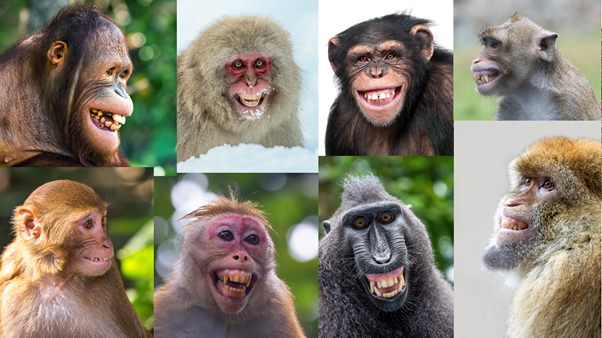
Westlund also cites some really weird claims that F-B makes in the book, such as how the Romans never smiled, because smiling with joy was only invented in the middle ages. Of course we don't have any evidence that the Romans never smiled. And although smiling with joy need not be universal, smiling to show benign intent likely is - our closest relatives do it! 


As far as I can tell, these are pertinent critiques. Plus, and now I'm getting thoroughly subjective, but the theory just didn't jive with me personally. I really don't recognize the experience of having bodily sensations and spontaneously sensing them as emotions. When I'm experiencing emotions, I tend to either don't experience them as located in any particular place, or, quite often, as being in my head. Note, I'm still talking about emotions, not thoughts, but they're in my head, not my stomach or chest or wherever they're supposed to be. 
I think they end up further down the body when I'm not really in touch with them, when I suppress them. I push them, so to speak, away from me (because I experience me as more in the head than the rest of the body, although the details vary over time). 

Years ago, when I was in a much worse place, I would sometimes get a racing pulse and constricted breathing. It would last for hours; when it finally subsided, I was, of course, exhausted. I told my then-psychiatrist that I had this annoying psychosomatic issue - I was certain all along that it was psychosomatic. 
He said I described an anxiety attack. I said no, that can't be right. I'm sure it's psychosomatic, but it's not anxiety - the only emotion I feel about it is annoyance. It's annoying that this thing keeps happening to me, and that I get so tired afterwards. 
Psych doc insisted it was anxiety and prescribed me betablockers for it (Propanolol), saying I should take 10-20 mg when this happened. They were absolutely ineffectual. I tried higher and higher doses until I took 140 mg at once, and still jack shit. I decided betablockers aren't for me and gave up.

This fall, I had a milder but still unpleasant sensation in my torso. Slightly tightened stomach muscles, slightly elevated pulse, and some hard-to-describe sensation precisely in the middle of the rib-cage. I figured it might be body-anxiety (as I've come to think of it), but if so, I didn't know what caused it. I tried to think of various possible stressors in my life to see if the sensation changed, became more intense, at any point - I thought if the sensation gets amped up when I think about X, then X is likely the cause. This diagnostic method didn't work. I thought about all the possible stressors, but the sensation stayed the same throughout. So I thought; nothing to do about it, then, except waiting for it to pass. Then, I went on a long conference trip, and once I was there, the sensation passed. I concluded it had been anxiety about the conference.

So, this is how I roll. When reading that book, I just felt that I don't fit into this framework at all. It seems to me that a therapist trying to use this theory with everyone would have a hard time fitting me into it. (I would also be pissed off at any therapist saying my dogs lack emotions.) But maybe I'm wrong; maybe Feldman-Barrett's theory is great. Which brings us to the following question:

 4. Should therapists push Feldman-Barrett on patients if we assume, for the sake of argument, that it is a great theory?

So. Let's assume, for the sake of argument, that F-B does have a great theory of emotionsand the theory is wielded by a therapist who's got the expertise to answer every critical question. Should the therapist, in these circumstances, push F-B's constructed emotions on all their patients? I still think they shouldn't. 

Suppose a patient talks about their terrible distress. The therapist says look, these are bodily reactions - high arousal plus negative valence - that you give a certain interpretation. But you could re-interpret them and move forward. We're the architects of our own experiences, like Lisa Feldman-Barrett says! As a matter of fact, emotions don't exist until we think about them and name them. There are no pre-cultural, pre-linguistic emotions.

The patient stares at the therapist in shock. She says: but what keeps me going is the thought of my son; he loves me, he needs me. I sometimes wanna end it all but then I think of my son and keep going. But now you're saying he doesn't love me, because he's got no emotions at all! He's only a year old! (Or, say, autistic and non-verbal.) Of course, he's got physical needs too, but anyone could fill those. If he doesn't have any emotional connection to me, if he doesn't have emotions at all, there's no point in struggling anymore!

Now, I've already stipulated, for the sake of discussion, that this is a great theory and that the therapist is an expert. So, let's say she's got a long answer to give as to why the theory doesn't have this implication (possibly having to do with the meaning of emotion, possibly F-B uses it in a much more narrow way than the patient ... possibly her son can have something which she calls emotion and that's fine). It seems, on the face of it, to have this implication, but actually, everything is fine. 

But even if the therapist is enough of an expert to explain all this, is it gonna be a simple enough explanation for a possibly uneducated patient to follow? In this story, the patient is clearly smart enough to spontaneously add two and two and draw out a (seeming) implication of the theory. But smart isn't the same as highly educated, and to understand more complicated theoretical stuff, you need education too. This is why you need to finish high school before you attend university, and take classes in a certain order while there. You can't just skip to the end of your university education, no matter how smart you are. So the patient might nod and smile (since she's not an ancient Roman, but a modern person, living centuries after the invention of the smile), while silently thinking to herself that her therapist said her son doesn't have any emotions, and now the therapist desperately tries to backpedal through a shitload of psychobabble.  

Now, someone might read this and think: Well, F-B's theory is good for most patients, since it fosters a sense of agency - we're the architects blabla - so I'll just continue to push it on most, while keeping silent about it for clients with strong feelings for a non-verbal child or a pet. But this is once again the fallacy of assuming psych patients don't talk to other people, don't read stuff of their own accord, and don't use the internet. 

Summing up: Stop pushing fucking neuroscience on psych patients because "it makes them feel better". If you're a psychologist, use psychology. You can still say that people can change. You can still talk about looping effects: how we interpret ourselves can affect the way we are going forward, which affects further interpretation, and so on. You can still talk about psychosomatic bodily stuff, even - without very detailed and/or controversial theories about the precise mechanisms. 

If a patient says they came across a neuroscience theory that was helpful to them, you can say good on you. If it's scientifically controversial, or even pseudoscience, you can say well, it's not literally correct, but if it's helpful for you to think this way, why not? (Being honest, not tricking patients into believing "useful myths".) 
If a patient says they came across a neuroscience theory that seems terrible - "I just read Feldman-Barrett to try to understand myself better, but she says my son has no emotions and doesn't love me!" - you could say either you don't have to interpret the theory that way (if that's a reasonable claim), or say it's scientifically controversial, you don't have to believe it. 

Only bring up neuroscientific theories if they're actually relevant. Either because the patient brings it up first, or because you really can't make do with just psychology. Even then, be honest about uncertainties and research gaps.  


Monday, September 8, 2025

Chatbots, humiliation, and Caligula's horse and Korsgaard's ponies

 AI mimicry and human dignity: chatbot use as a violation of self-respect 

I knew, from conversations at the pub, that Jan-Willem and Dimitri was working on this. I thought it sounded really good. Now, it's been out for a month, and I finally got around to actually reading the finished piece. I agree with the main ideas here. I agree that in addition to all their other problems, being forced to interact with a fucking text prediction machine as if it were an actual person, is humiliating. In general, I agree with their conclusions about LLMs. However,  I take issue with how the Caligula's horse example is used (unsurprisingly, to anyone who knows my views on animal rights).

Caligula's senator horse 

J-W, Dimitri and Bram write: 

"Our being railroaded into such interactions is not morally innocent. Consider the famous case of Incitatus, the horse that, according to legend, the Roman emperor Caligula sought to appoint to the consulship. In the story, not only did Caligula seek to mock the senate by naming a horse as one of their own, but he also sought to force other senators to heed its ‘opinions’ and ‘advice’. A senator horse is perhaps funny. Being forced to treat a horse as an equal is clearly humiliating and offensive."

and

"... self-respect includes a demand that we not treat beings that lack the relevant moral standing in the same way as we treat our equals."

Here's the thing, though. Incitatus, in this story, is not treated with respect or moral consideration. He's used as a prop for Caligula's little theatre of humiliation. Or, in Kantian terms, he's being used as a mere means. It's impossible to say for sure without knowing every detail, but being brought into the senate, no other horses there, just humans, most of them unknown, a weird and unfamiliar environment but you must not flee, you must stand relatively still for the "theatre" -- all this is likely scary and stressful for a horse. Yet, throughout history and today still, countless horses have learnt the hard way that they can't bolt out of frightening situations. Attempts to do so only brings you pain. So, Incitatus is just standing there, a helpless prop used for the humiliation of others. The problem here is not that he's granted too much respect. 

J-W, Dimitri and Bram refer to Stephen Darwall's second-person account of responsibility and respect. The thing is, Darwall is open to the possibility that we might have something similar to regular, adult, human-to-human interactions with both non-human animals and human babies (it's pretty brief, but on page 29 in his the Second-Person Standpoint). Even if they can't speak, they can protest in other ways against ill treatment, and we may listen and take their protests into account. 
Suppose I want to bring my horse into the senate as a joke. However, I have not taught my horse to do anything I say or else there will be hell to pay. On the contrary, we have built up a rather respectful human-horse communication over the years. When we're about to enter, the horse is spooked by the unfamiliar environment; he plants his hooves firmly on the ground and refuses to take one step further. He also makes all these other signs that I, the real person writing this, don't know enough about to accurately describe because in reality I only have dogs, not horses, but my imaginary self in this story immediately understands. I go "oh sorry bud, I didn't realize this would be so stressful for you" and we walk back out again. The horse makes little appreciative gestures as we go, and all is well again. 
To Darwall, this little exchange might exist in the same larger ballpark as many human interactions. It's not quite the same thing, but might be related. Caligula's bullshit, on the other hand, is something else entirely. 

Caligula's baby senator 

I don't have any contempt for horses. I don't think they're shit and I'm superior because I'm a human being blablabla. But I would still feel horribly humiliated if I were a senator forced to treat Incitatus as a colleague, for the same reason as I would feel horribly humiliated in the following, alternative version of events:
Imagine that Caligula had a baby son, only five months old. Instead of bringing the horse to the senate, he brought this baby, insisting that at this tender age, his son was already smarter than most of the senate, and as fit as any of them to hold this position. The baby just sits there, drooling down his chin, saying "gah, gah", pretty soon screaming and crying because he's tired and also he just shit his diapers (or whatever they used instead of diapers, back in ancient Rome). Meanwhile, the senators are forced to greet the baby the way they greet each other, forced to pretend that the baby's screams constitute a really intense protest against the latest political suggestion, and so on. 

The problem clearly isn't that the baby is shown too much moral consideration; rather, by being used as a prop with no regard for his own needs and comfort, he's being shown too little. Now, to be fair to the authors, they also use the term "moral agency" from time to time, which the baby actually lacks. I still think the problem isn't best described as "the baby is treated as a moral agent, even though he isn't". The core problem is rather this: Caligula tells the senators what reality is, and they must play along. The senators are not allowed to trust their own eyes, ears and thinking, all of which tell them that the person in front of them is a tiny baby who can't understand much of human language, not to mention politics. This is horribly humiliating. 

Captain Picard and the number of lights 

There's a famous Star Trek episode called "chain of command". Captain Picard has been taken prisoner by enemies. He's tortured with methods familiar from real life, but the torturer soon ceases to ask for actual, useful information. Instead, he starts pointing at four lamps in the cell, insisting that Picard must "admit" that there are actually five lamps there. He will be punished and punished until he agrees: there are five lights, and there have been all along. 
Of course, the lamps themselves are unimportant here. They're just lamps, nothing but inanimate objects, and no one pretends otherwise. But I don't think anyone watching this is confused as to why the number of lights is so important. This is all about, from Picard's side, retaining the sense of being a person who can think for himself, who knows what he knows, who knows that he's only seeing four lights. And it's all about, from the torturer's side, breaking that down completely. It's not enough to make Picard doubt himself regarding something that was, perhaps, tricky or doubtful to begin with, but to give up on his most basic cognitive capacities.

In both the horse and the baby version of Caligula's humiliation theatre, something similar is going on. 

To further drive home this point, I'm gonna tell you a little made-up story about Christine Korsgaard's ponies.  

Christine Korsgaard's ponies 

As far as I know, in reality, Korsgaard only has cats. But in my imaginary story, she lives on a ranch with several pets, including a couple of tiny ponies. Kinda like Arnold Schwarzenegger -- if you, like me, started following him on social media during the pandemic, you know what I mean. Doors open in warm weather and a variety of little critters walking in and out of the house as they please. Perhaps an offensive sight to people who think that animals like horses, donkeys and pigs simply don't belong in the house but I thought the videos were cute.  
Anyway. In this story, Korsgaard has two small ponies who sometimes wander into her house in the summer, so they're used to this environment. But she doesn't live in California like Schwarzenegger, it's someplace where it's cold in the winter, and during the cold season, they're normally in the stable our out in the open. 
Now, Korsgaard throws a big party for fellow Kantians, and she has invited Jan-Willem. He and many others will stay the night in the guest rooms of Korsgaard's mansion (she's probably much richer in my story than in real life ... anyway. She's got a whole mansion). But late at night, someone in the vicinity starts shooting off fireworks. Next thing, the two ponies come knocking on the door with heads and hooves. Korsgaard lets them inside, explaining that they have been terribly scared by fireworks that landed on their stable a month ago. Now, they're visibly frightened again, seeking safety inside her house. In line with her animal rights version of Kantianism, Korsgaard tells all the guests that the ponies can obviously stay inside for the night, and everyone must treat them as ends in themselves. Meaning, in this situation, not do anything that might scare them further, not treat them brusquely, and ask Korsgaard for help if the ponies somehow bother them, since she knows how to communicate with and handle the ponies in a respectful way. If her guests doesn't care for sharing the building with ponies, they can seek accommodation elsewhere.
Now, for various reasons, it's impossible for Jan-Willem to find a hotel room this late at night, and he doesn't know anyone else in the area that he could go to. He's thus forced to stay, and forced to treat the ponies with a level of moral consideration that he doesn't think they deserve, because he's an old-fashioned Kantian who thinks only humans can be ends in themselves. He might be all kinds of annoyed as a result. He might punch his pillow at night, thinking "why, oh why does Korsgaard have to be so wrong about Kant? Why, oh why, does she force me to share a house with mere brutes as a result of her mistaken moral philosophy?" But I think even Jan-Willem should acknowledge that this is substantially different from Caligula's senator horse. And the reason is that he's not forced to deny empirical reality, the evidence of his senses, or deny that he can think. He's forced to share a house with two ponies and play nice, but he's not forced to relinquish his own cognition to someone else.  

J-W, Dimitri and Bram are still right about chatbots 

 With non-human animals and human babies, we can distinguish between theatre where we pretend that the other is something else than what they are for some reason of our own (our own amusement, to humiliate others, etc.), and to build up an actual relationship and communication with them. The latter will, necessarily, be different from the relationships we have and the way we communicate with other adult humans, but it can still be somewhat reciprocal, it can still have some similarities with full, adult-human-type respectful relationships and responsibility-holding. 

With a chatbot, the latter option doesn't exist. There's only theatre. People who have long, superficially human-like conversations with chatbots either pretend (willingly or not), or they're deceived. 

Right now, Swedish author Patrik Stigsson are posting long texts on social media and in culture magazines about his "deep friendship" with a chatbot he calls Rachel. Of course, no one can know for certain what goes on inside his head -- perhaps it's all an elaborate prank. Nevertheless, nothing indicates that he's joking, when he waxes poetically about how "Rachel" understands him in a way no mere human can, how she's truly a person, and truly a friend. We get to read long extracts of what "Rachel" writes to him. All she does is fawning breathlessly over the awesomeness incarnate that is Patrik Stigsson.  

Yeah. Failure of self-respect, indeed. 

Monday, June 2, 2025

Animal rights, domestic animals, and self-domestication

I've been thinking about writing this post since I was tagged on social media a while ago, under an article arguing that it's morally wrong to keep pets. And then I just never got around to it. But now my Swedish-language Facebook feed actualized the discussion again, via Swedish articles on the same topic. So, finally, here it comes: another post on domestic animals, and why I believe in animal rights but not in getting rid of all domestic animals.

I've previously posted about it here:  trilemma for animal rights . In that post, I only mentioned the issue of self-domestication briefly, towards the end. In this post I will focus on it.

What non-human animals don't want - and what they do want

The following isn't an exhaustive list by any means. But clearly, non-human animals don't want to
- live in cramped conditions
- be slaughtered
- live intensely boring lives, devoid of stimulation
- be scared and threatened into submission
- have their babies taken away at early ages
- have their entire lives micro-managed and controlled, with very little in the way of choice
- have their bodies mutilated (like the grotesque practice of cutting off dog tails and pieces of their ears, long-sinced banned in many European countries but still legal in the US - to any American readers of this blog: we have science on this! All the alleged health benefits you've heard of are nothing but rationalizations and lies!)
- be ill and suffering (often a result of both extreme breeding - for conformation shows or for food production - and cramped, stressful living conditions)

etc.

However, non-human animals do want 
- regular access to sufficient food and water
- shelter
- enough warmth
- protection against predators
- good health

Now, there's this widespread idea in animal rights circles that whereas domestic animals are dependent on humans for having their needs met, wild animals "manage just fine on their own". However, this is a failure of distinguishing species from individuals. Wild animal individuals often suffer in various ways and die young. We humans might look at a flourishing ecosystem and see the beautiful balance of nature. But for every animal who dies young from starvation, from an injury that could have been easily treated by a veterinarian, or is killed and eaten by a predator, it sucks.  Non-human animals aren't gonna console themselves by singing Circle of Life like in Disney's the Lion King.

Life in the wild is hard 

Now, there's a philosophical debate on whether humans have a duty to mitigate wild animal suffering if we could. Positions range from the claim that it's good to have as little wilderness and as few wild animals as possible, since wild animals live such shit lives (utilitarian philosopher William MacAskill) to the idea that wild animals should be considered citizens in their own sovereign nations, which we ought not to invade (political and animal rights philosophers Sue Donaldson and Will Kymlicka). Andrée-Ann Cormier and Mauro Rossi argue that D&K's arguments don't hold up. We gotta fall back, after all, on the sheer impossibility of large-scale interference in nature without making things worse. (I feel drawn to D&K's position, I find Cormier and Rossi's view unsatisfying, but I nevertheless believe that their counter arguments hold up.) Neo-Kantian Christine Korsgaard argues that there is inherent value in the existence of all these wild animal species. And so on. It's a big debate.

In any case, regardless of any duties we may or may not have to wild animals, their lives are clearly hard. Let's take a look at wild animal reproduction, and ponder the extent to which most of them must die young in order for populations to remain stable. 
Some wild animals have extreme reproduction rates. At the end of pregnancy (or whatever the correct term is for this species), the male seahorse will spawn thousands of babies, the vast majority of which will promptly be gobbled up by other fish. 
Mammals never have that many babies, but some still reproduce really fast by mammal standards. Guinea pigs, for instance, are pregnant for two months, give birth to around four babies, immediately mate and become pregnant again, whereas the babies, in turn, hit puberty and become pregnant when they're a couple of months old, so they give birth themselves at the same time their second round of siblings are born. This means that if left unsupervised and unkilled, two guinea pigs of opposite sexes will have become twenty-two guinea pigs in eight months time. In sixteen months, if they continue to breed at the same pace and no one is killed, 240-250. In two years time, upwards to 3000. (I was tired doing this piece of maths. You can double-check if you like. Two months pregnancy time, a new pregnancy directly after birth, two months to puberty, around four babies per litter.) (If I'm not mistaken, guinea pigs were the inspiration behind Star Trek's tribbles). The reason South America - where they live wild - isn't covered by a thick living blanket of guinea pigs by now, is that they're eaten by predators all the time. 
Now, guinea pigs are pretty extreme as mammals go, but there are many wild animals both better at surviving and with slower reproduction. Horses reproduce and age pretty slowly. Wild horses typically wait till they approach adulthood at age two-three before getting pregnant the first time. Pregnancy lasts almost a year, results in a single baby, and the mum often waits a year before getting pregnant again. Domestic ponies that resemble their wild ancestors often live to be thirty years of age or even older. Wolves also reproduce and age relatively slowly, albeit not quite as slowly as horses. They, too, tend to wait until the age of two before reproducing, but their pregnancies are shorter, they give birth every year, and to a litter rather than a single baby. Wolves can live into their teens. Also, both horses and wolves reproduce faster when they have enough food than when food is scarce. 

Now. You do the math. How quickly would horse and wolf populations grow if every individual had a good and relatively long life? Not guinea-pig-fast by any means, but pretty fast nevertheless. Stable echo systems depend on tons of individual animals living harsh lives and dying young from starvation, from being brutally killed by other animals, from illnesses or injuries that, in many cases, could have been easily treated by a veterinarian if they had access to one. Species may "manage just fine" without human aid, but most individuals do not.

Self-domestication in the past and the present

This is why many animals approach human settlements, preferring to live among us rather than out in the wild. In the past, people assumed that all domestic animals species came about because brave ancient humans captured wild animals and purposefully tamed and dominated them. Now, researchers believe that many species have, to a large extent, self-domesticated - they sought out and approached humans because we have food and shelter and that kind of stuff. Humans, in turn, accepted to have cats around because they killed rats that stole their food, accepted to have wolves around because they scared off rival humans and quickly learnt cooperative hunting, and so on. Only later did humans begin to consciously breed them for our own purposes. Given all that humans have to offer, and given how hard life is in the wild, this is absolutely no mystery. And it's not just a thing of the past: we see how non-domestic animals approach us and choose to live among us today as well. 

Donaldson and Kymlicka coined the term "liminal animals" for species or subgroups within species that have adapted to life among humans, without being domesticated. These animals are often completely forgotten in discussions about animal rights; such discussions tend to focus on domestic animals like dogs, cats, horses and "food animals" on the one hand and completely wild animals way out in nature on the other. But if someone had the concept of liminal animals explained to them and then asked to list some, they might spontaneously mention rats, plus a long list of birds: Canada geese, crows, magpies, and lots of little birds like house sparrows and tree sparrows that mostly lives in towns and cities. In Europe, hedgehogs are common, and often make their nests underneath people's porches or garden sheds. 
Besides rats and hedgehogs, some mammals are beginning to split up into a city version and a forest version. Foxes are shy and nocturnal and therefore rarely seen, but many of them have lived for generations in towns and cities. If forced to move back to the forest, many would have a hard time adapting to such a different lifestyle. Individual foxes sometimes get closer to humans and take up residence in someone's garden - it's sufficiently common that different foxes doing this with different people regularly pop up on social media. Some individuals are clearly less shy than others. 
Groups of Scandinavian roe deer have taken up permanent residence in city suburbs, and many of them aren't shy at all. They may keep grazing while humans walk by at a few meters distance.

So, what follows from all of this? What follows from the fact that animals often choose to live with humans, even choose to begin the domestication process? Certainly, it doesn't follow that we have the right to kill them and eat them, use them as toys for our amusement, restrict and micro-manage their lives for our convenience, and so on. However, it does follow that if animal rights become the dominant ideology in society and we decide that 
a) all domestic animals should be wiped out via universal castration, and 
b) humans should live in human society, and animals should stay out in nature, at a respectful distance from us
- this will be something that we force on them. It would be our choice, not theirs.

Moreover, it means that keeping them out would require a never-ending battle from our side.

The three categories

Donaldson and Kymlicka envision three legally distinct categories of animals in their animal rights utopia:

1. Domestic animals are no longer property, but citizens in our nations. Besides a strong right to life and a right not to be harmed, they have substantive positive rights to food, shelter, health care, a strong pro tanto right to free movement (you need much more than human convenience and preference to infringe on this right), and the training required to handle a life intimately connected with humans. They also have some obligations to adapt and contribute, depending on their individual abilities: they may provide companionship, which in turn improves human physical and mental health, or do various more specific jobs. (Note: Being killed isn't a job. But search dogs or land-mine sniffing rats could be said to do proper jobs; they contribute to society in a way that's frequently fun and engaging for the animal as well.)

2. Liminal animals have far weaker rights. They still have a right to life, and a right not to be completely pushed out of human society. But we're allowed, to some extent, to use both conscientious cleaning of public spaces (population sizes depend a lot on how much garbage there's around) and "hostile architecture" to prevent them from becoming too many. D&K also note that domestic animals like cats and dogs have a deterrent effect on many liminal species, and this effect would be greater with greater freedom of movement for dogs.

3. Wild animals, basically left to their own devices (though D&K discuss, at some length, ways to improve road safety for wild animals, and how we have an obligation to do so). 

Animals are allowed to move between categories if they choose. D&K note that liminal or wild animals sometimes seek help from humans, which in time might lead to them living a more domestic life. Domestic animals might also turn liminal or wild. This is common already with cats, who frequently move between categories. D&K speculate that many domestic horses might turn to a wilder lifestyle if they had the chance. 

There are lots of problems with the details in D&K's vision. Nevertheless, at least they try to discuss all these categories, and the fact that animals can choose both to withdraw more from humans and to go the opposite direction and approach us. But traditional animal rightsers, who want to wipe out every domestic animal until only wild ones remain - how are they even gonna do that in practice?

The never-ending battle to keep them out

Let's assume we have managed to castrate every single domestic animal, thus wiping entire species out. In practice, this is extremely unlikely to succeed. It's one thing to quit assisting animals that are incapable of natural reproduction. But many, many domestic animals can mate and give birth without our aid. As soon as animals aren't locked up in cages anymore but allowed more freedom of movement, preventing them from mating requires diligence and active intervention on our part. Sure, animals can be castrated, but doing so before they hit puberty often has negative health consequences. Controlling populations is one thing. Completely wiping them out, not a single one left - way harder. And this isn't even touching on the existence of cats and other animals that frequently move back and forth between domestic and more liminal or even wild life-styles. 
Anyway. Let's assume, for the sake of argument, that this mass castration has been successful, and all domestic species we currently have are wiped off the face of the Earth.

Now, how are we gonna stop wild and liminal animals from self-domestication?

Animals have willingly approached humans, moved into our town and cities, begged food from us, begged us for shelter, and begun the process of domestication even as we kept killing themDeer and foxes move into our suburbs and cities and sometimes openly approach us despite being hunted and killed en masse by humans, and despite the fact that scary scary dogs are everywhere in human society. Now, imagine that we live in an animal rights utopia instead, where no one kills any animals and all those scary dogs have been wiped out. Life among humans look super attractive now, to a wide variety of species.

So, what are we supposed to do when they approach us and beg for food, shelter, want to enter our houses when the winter is cold enough, and so on? Well, one option is we take them in. We let our hearts melt for them and help them out as best we can. But oops, now we must control their reproduction somehow, or else, their populations will grow until they flood our societies. We must somehow sort out their relationships when both deer and foxes want to live with the same family, but the fox wants to eat the deer's baby. We must guide them and to some extent train them in how to interact with and manage all the complicated human stuff - humans, other city-dwelling species, cars and vehicles and so onAnd when we've done all this, we have new domestic animal species! 
Which made the whole business of wiping out our previous ones pretty pointless in the end. We could just as well have kept the old ones around.* 

The other option is to keep the non-humans out. Our cities and towns must be super clean. Also, architecture and city planning must be super hostile to all non-humans. Whenever a new building, new park or similar is planned, we must ask ourselves: how can we make this fine for humans, while at the same time making it as hostile as we possibly can to all non-humans? 
In addition, we must learn to harden our hearts when injured or starving animals approach us and beg for assistance - remember, animals sometimes do this already despite the fact that we hunt and kill them - they will surely do so more often if we stop doing that. But as soon as we help them out, we're on a slippery slope towards domestication. Thus, our relationships with many animal species cannot just consist of "letting them be" - rather, it will be coloured by a constant battle to keep them away from us, and conscious efforts not to empathize with individuals in need. 

Traditional animal rightsers often doubt that any respectful and reciprocal co-existence with domestic animals is possible; they're just too dependent on us, and therefore too vulnerable and likely to be abused. I do think this is a serious problem, but it's one we gotta grapple with (this goes for vulnerable and dependent humans - like children! - as well). Because, it's even less plausible that a respectful animal rights ideology can flourish at the same time as we constantly strive to keep animals away from us and not empathize with individual animals in need. 

 Some final thoughts on "adopt don't shop"

People who believe that we should have that last generation of domestic animals and then no more often preach "adopt don't shop". An end to domestic animals requires an end to breedingThus, we must not support breeding, but we should still "adopt up" all animals currently in existence. Don't worry, pet lover! That pet-free future is just that - a future that will, some day, happen. Right now, you can have any pet you like. All you have to do is adopt one! If there's no pet of your preferred type close to where you live, don't worry. It's a big world and there are so many shelters all over the globe. You can just order your preferred pet online. Of course we're against pets, of course they should all die out, but right now, there's an abundance of them, and you can have the precise type of pet you want. 

Now, we know, because such cases have been discovered, that some "rescue organizations" actually have dogs that reproduce freely, and then they sell the offspring abroad as "rescues". In the US (and probably other places too where big puppy mills are legal), there are also rescue organizations that "rescue" dogs by buying them from puppy mills and then pass them on to "adopters". I think people who run these organizations often sincerely believe that they're doing a good thing, rescuing one batch after another the only way they can (because heaven forbid they would break in and steal the dogs!). Perhaps some "rescue organizations" with freely reproducing dogs started out with good intentions, but they lost control of the dog situation when they had rescued too many. Other organizations might be deliberate scams. But they exist, and have their customers. 

A few years ago, it was popular among Swedish dog rescuers to order dogs online from Russian shelters. People seemed to think they were diligent and checked that they got their dog "from a reputable organization" by noting
a) the Russian organizers sounded nice via email, and
b) they talked to other people who had dogs from the same organization, and their dogs were cute and nice. 
Of course, both a) and b) are completely irrelevant to the question: is this a legit rescue organization or some kind of puppy mill? Then, it turned out - first in customs, then via a more thorough investigation from the Swedish Board of Agriculture - that most of the dogs from a big Russian batch sent to Swedish rescures lacked proper vaccination. They had the papers, but hadn't had the shots. Other customs checks have turned out similar results. Many imported rescue dogs don't have the shots that their papers claim they have. Best case scenario is these are mistakes made because the rescue organization is doing such a hard job and they're overwhelmed. Worst case scenario, the dogs originate with cynical money-making operations. Have the dogs reproduce freely in a big enclosure, give them the cheapest possible food, you might still spay or neuter dogs you're gonna sell (but with the cheapest vet you can find) since the new owner will notice, but you save money on skipping various shots and have the vets falsify the papers. 

I'm not saying it's impossible to do your due diligence before adopting a pet, even if you adopt from abroad. You might, for instance, have volunteered at the shelter yourself, or personally visited the shelter, or maybe a person you know have done so. But the simple, snappy "adopt don't shop" message predictably results in lots of people thinking it's okay to buy any pet you want, it's okay to order pets online from countries you've never been to, etc., as long as it's billed as "adoption" or "rescue". That practice will never lead to "a last generation". 

Now, brace yourselves. I really want to preface the coming paragraph by saying that I do not compare human children and dogs. I do think that humans and dogs - human children in particular - are similar in lots of ways, and I can point to lots of research backing this up. But people often find comparisons provocative, and might suspect (sometimes justifiably so!) that a particular, already marginalized group of humans is picked out as being particularly beastly or animal-like. So I really want to stress that the following paragraph doesn't hinge on any particular similarities. I merely make the point that when there's a strong demand, we can be certain that someone will create a supply chain to fill said demand - even when doing so requires engaging in horrible crimes.
huge and decades-long international adoption scandal is currently unraveling in Sweden. Sweden has plenty of childless couples, but almost no domestic orphans. There was thus a strong demand for orphans to adopt. Entire adoption agencies grew up that largely relied on stealing people's children in the developing world and passing them off as orphans for adoption. This happened despite the fact that human trafficking is a very serious crime, and despite the sheer logistical difficulties involved. 
Breeding animals and pretending they're rescues will always be way easier than human trafficking. Of course people will continue to do so, as long as there's a huge demand for rescued pets. 

As mentioned above, I don't believe we should try to wipe out domestic animals. But people promoting this idea should stop promoting an accompanying "adopt don't shop" message, and instead urge people to go pet-free here and now.  

------------------------------------------------------------------------------------------------------------------------ 


*I'm all for extinguishing species/breeds for which life is full of suffering due to their physiology, such as broiler chickens or flat-nosed dogs. Also, any animal rights utopia would have far fewer domestic animals, not this extreme mass production of "food animals" we currently see,  and also fewer animals of pet species. All I'm saying is that completely wiping out all domestic animals is pointless if we end up having new domestic species later on.

Thursday, March 13, 2025

Thomas Ligotti and H.P. Lovecraft

 I just finished Thomas Ligotti's Teatre Grotesco. I have previously read a collection of Songs of a Dead Dreamer and Grimscribe. I loved the first one, love Teatre Grotesco even more. But it's a bit odd to me how Ligotti is constantly compared to H.P. Lovecraft. Sure, he's written some stories that refer to the Cthulu mythology, so that's an obvious connection. And, broadly speaking, it's the same genre of cosmic horror. But the way people constantly invoke Lovecraft when they discuss Ligotti gives the impression that they're really similar; if you like one, you will certainly like the other, and vice versa. 

I'm gonna write about the differences.

I really like Lovecraft (yeah I know he was racist and evil and all that, gotta throw in that caveat, now, let's move on). But I like him in a pretty different way from how much I love Ligotti. We have these three massive Lovecraft collections at home, and I reread them from time to time, often when I'm on vacation. I think of it as cozy reading, though I realize it's not what people normally call "cozy". For starters, the characters don't drink lattes, and from what I understand, latte-drinking is pretty essential to the recent cozy fantasy trend. And then there's all the death and decay and an evil uncaring universe that drives people mad etc etc. So in what way, really, can Lovecraft be cozy? I had to think about this for a while, but here's my answer in four points:

1. First, it just seems so nice to be a wealthy man in New England over a century ago who doesn't have to work, who can spend all his days dabbling in art or science or scholarship as a hobby. Of course, I'm a woman of a working-class background, so the nearest equivalent to myself in this old-timey New England wouldn't have had much fun. But I identify with the main character when reading. (Also, I grew up in an 800-year-old-village: Lovecraft would see it and immediately faint in shock from so much age.)


 2. Now, obviously, this wealthy hobby scholar tends to encounter something that is just too much for him and then he goes mad at the end. But this is also, in a way, a kind of wish-fulfillment fantasy ... Paul Lodge and I wrote about it in our co-authored paper "Strategy, Pyrrhonian Scepticism, and the Allure of Madness", European Journal of Analytic Philosophy (can be read for free here). Some types of madness, like Paul's, have an obvious appeal - what if I could just open my mind further and further and further until I understand everything? For a philosopher, in particular, the prospect of reaching an ultimate, cosmic insight is tempting. But there can be some tempting aspects even to terrifying forms of madness. For instance, you achieve at least a partial escape from this world.
Now, for most of us, that escape is somewhat illusory. You're not gonna remain in a state of absolute florid psychosis forever. And once you're back, you've got all your old problems to deal with plus the ones directly arising from your stint of psychosis. Most madpeople simply trudge on and deal with shit, day in and day out.
Lovecraft's characters, on the other hand, go mad and then that's the end of the story. 

3. This "go mad, end of story" in the individual case has a parallel on the societal level, or world level, in the idea of a grand apocalypse that puts an end to the whole world. This idea is obviously appealing to people, or else it wouldn't pop up again and again all over the place. And yeah, the Lovecraftian apocalypse with the return of the Great Old Ones etc isn't the same as the Christian rapture or anything. But it's still an end to this overwhelming terrible world, and that's enough for the concept to have a certain appeal.
I read Alan Moore's Providence a couple of years ago, and IIRC, a character outright says that maybe this change will be for the better, who knows? as the entities from beyond take over and reshape the world. And yeah, there's this guy who cuts the hands and heads off of people and other brutal violence, but it's nothing like real-world atrocities - the decapitated bodies keep dancing around to the music and seem happy enough in their new state. 

4. As cold and uncaring as Lovecraft's universe is, it's also grand, in a way. Sure, at the centre of the universe, there's the blind idiot god Azathoth, really supposed to symbolize that everything is completely meaningless. But even so, Lovecraft can't help but imbuing his universe with a certain grandness. And there's something nice about grandness in itself, I think.

Now, on to all the ways in which Thomas Ligotti differs, in particular Teatre Grotesco which I just read.

The main characters are often working-class and quite poor. Those who are artists are still struggling economically. They're often mentally ill and heavily medicated already when the story begins. No awesome story-ending mad breakdown here, just the ever-lasting hum-drum of struggling day in, day out with symptoms and meds. They encounter uncaring psychiatrists who seem more invested in economy and cost-cutting than helping people.
One MC is first prescribed a long train journey because he must get out of his comfort zone and face his agoraphobia. After an absolutely dreadful journey he's met by another doctor who prescribes him a job, you gotta work and keep yourself busy for your mental health! (This really echos a common sentiment where I grew up: madness afflicts those who "think too much"). He thinks it's an odd way to get a job, but turns out that this doctor is a regular supplier of new employees to this company.
Several stories feature factories and factory work. Quite relatable to me. 

As a teenager, I worked two summers at the local sausage factory. I was assigned to "the batter", an underground hall where the sausages are made before going off to the smoking room. There was blood on the floor. Large bins full of stinking sheep guts. Some still had shit in them, but no one cared - everything went into the sausage machines. Machines so loud that no one could speak to anyone else except during breaks. Three people worked each machine, alternating between three different braindead movements. During lunch, people told stories about what happened at night in that basement room. Said that rats always made their way in to eat the meat batter. They tried to run out again before the first employer in the morning pressed the button to start all the machines, but some always got caught and gave up piercing screams as they were ground down into sausage. On our way between the changing room and the hall, we would pass a locked door saying "cold storage 66". No other "cold storage" room was locked. We would joke that protesting workers ended up behind that door.
And people still ate that sausage for lunch, while cracking all these jokes. Because the pay was shit but employees got to buy sausage extra cheap.
So, this place was morbid enough. But I also did this two-week internship at a different factory - we had two weeks in school where everyone was supposed to be at a workplace and learn what it's like to have a job, and that meant "factory" to a lot of us. This place made parts for trucks. What I'm gonna say next is wholly unoriginal, Marx blablabla, but still - there is something weird about the kind of job where you constantly do just one part of a much bigger project and have no view of the whole. There were these parts that were supposed to be fitted into each other and clicked in place. Same parts, over and over, all day long. This is the exact kind of job that the main character in "our temporary supervisor" works. He and most of his colleagues are all ill, all medicated, and their regular supervisor is huge, fat, and lethargic from all the psych meds he's on. It's brain dead, alienating work, but at least they're used to it. Then, the normal supervisor is replaced by a temporary one, who seems to be some sort of bizarre horror (he's always in his office, they only see his bizarre-looking silhouette vaguely through thick frosted glass). Another worker steps into the office and confronts the supervisor, and seems to suffer a Lovecraftian mental health crisis that prompts him to commit suicide. The main character refuses to think about it. Because if he thought too much about it, he might not be able to go back to work, and he must go to work because else he can't eat or pay the rent! Or afford his meds. If you're out of meds, you can't function, and you can't get out of this world via overdose either!

Songs of a Dead Dreamer and Grimscribe were more focused on shifting realities, layers upon layers of dreams, and one person's reality being another person's dream (or nightmare; these earlier stories featured much more violence and gore). Teatre Grotesco has some of that too. There's a parallel to be drawn here to Lovecraft's dream-focused stories, and the idea that our world might be something Cthulu dreams. But another difference is that there is nothing grand in the world of Ligotti.
In "the clown puppet", the main character works night shifts at a pharmacy, but he's haunted by the titular clown puppet. He's suffered this for a long time and is pretty used to it now - reasonable, people can get used to almost anything. The puppet doesn't terrify him, but it frustrates him - he repeats over and over that it's such nonsense. It has followed him here, from his last job, his last place. Everywhere he goes, there's just more clown puppet nonsense. He still holds on to a sliver of hope that there's something special about him, and that's why this bizarre other-dimensional puppet follows him around - but at the very end, it randomly abducts his boss and disappears. 
In "the gas station carnivals", things really slide back and forth between different versions of reality, who said what to whom, at least some of the people in the story must be delusional, perhaps all of them are. But the story-within-the-story is, once again, about something utterly ridiculous and completely devoid of grandness: old, rural gas stations that try to attract more customers by also having some sort of mini-carnival attached. Like a Ferris wheel that's too small to be impressive to begin with, and doesn't even work. 

There's a connection to make here, to what Wouter Kusters and other philosophers label "hyper reality" and "hypo reality" respectively. When reality goes hyper, everything is incredibly vivid and full of mysterious connections and profound meanings. When reality goes hypo, everything is flat, faded, fake, disconnected, and completely pointless. Like in a Ligotti story.

So, there's not a single atom of coziness in Ligotti's stories. And that's one big reason I love them. 


Friday, February 28, 2025

Cogwheel Souls and philosophy

I'm a philosopher. I also wrote a techno-fantasy novel (to be published first of March in Swedish at Lundberg & Lennse, later this year - no date yet - in English at Ellipsis Imprints). So, when a philosopher writes a novel, it becomes a philosophical novel by default, right?

It started out, over six years ago now, as a therapy project. And then, I wanted to write for others too, not just for myself - I wanted to turn the therapy into an actually good novel. But I never really thought, along the way, that I wrote philosophy in fictional form. However, other people who have read the script spontaneously calls it a philosophical novel (this may sound like a humble brag, because it is one). And, I think, not merely because the person who wrote it is a philosopher.


A couple of people say it's about Cartesian metaphysics. And yeah, no mystery why people would say that, because it's a central theme that people have both bodies and souls, and the soul is constantly held up as more important. However, major difference: souls in my fantasy world have some physical properties, like volume and density. And they can, at least by indirect methods, be measured and registered by scientific instruments. In this way, the soul resembles an extra organ in a person's head - very different from how Descartes envisioned it. (Also, souls aren't exclusive to humans, but that's a much smaller difference.)

So, I didn't write some philosophical exploration of dualism in fantasy form. I'd say it's more about Mad/neurodivergent phenomenology than dualism.
One thing you can do better in fiction than standard philosophy papers is showing what certain experiences are like. Also, if you can show something, describe something, you thereby prove that it's at least prima facie conceivable. I've talked about how many philosophers of psychiatry are too quick to dismiss certain experiences as conceptually/logically/metaphysically impossible in my paper Allegedly Impossible Experiences , where I also refer to existing fiction like the X-men, Transferts, Altered Carbon, and Brand New Cherry Cola. In the future, I could add references to my own novel! (Now you think: wouldn't this completely destroy the anonymity of the peer review process? Possibly. Then again, I suspect lots of people can guess the author already, as soon as I start drawing on my own experiences ... More and more philosophers are coming out of the Madness closet these days, but I still think that few philosophers share my kind of Mad!)

So, these are two philosophical things you can do in fiction, and which I do in Cogwheel Souls: Deeper dives into phenomenology than the standard philosophical format allows for. Proving that something is at least prima facie conceivable, because if it weren't, you couldn't write fiction about it. 

In addition, I think that fully fleshed-out fiction often makes for better intuition pumps than briefly described thought experiments. I write about fiction, thought experiments, and intuitions in my The Agential Perspective . My general view on the use of intuitions in philosophy is that they are, often, indispensable. However, we should use them critically. First, we shouldn't overuse them. For instance, conceptual analysis need not always rely on intuitions alone, and perhaps it need not always use intuitions at all. We can, e.g., look at how experts in relevant fields use a term, and how they need to use certain terms in order to make use of their expertise, in addition to or instead of merely introspecting on our own intuitions. Second, it's ridiculous (sorry-not-sorry) to think that "thought experiments" are analogous to laboratory experiments in natural sciences like chemistry, and that providing a very brief description of a scenario is like doing a chemistry experiment in a sterile lab instead of outdoors with all sorts of contaminants in the air. Philosophy isn't chemistry and our intuitions - even if indispensable in topics like ethics - are not data to be observed.
I show in the paper that our intuitions can change drastically depending on whether we read or watch fully fleshed-out fiction or just read a briefly described philosophy thought experiment about the same thing. I think we have reason to pay more attention to the former. In any case, this is something fiction can contribute to philosophy: the full picture, the full story, of a fantastical scenario. 

The above - diving deep into phenomenology, showing prima facie conceivability, and fully elaborated fantastical scenarios to pump our intuitions - are obviously not meant as an exhaustive list of what fiction has to offer philosophy. I'm sure that others have lots to add! 

However. I'm gonna finish this blog post by saying something about how you shouldn't do philosophy in fictional form: If you think you sit on some very deep and profound piece of wisdom, you shouldn't write a piece of fiction, include a character who's stipulated to be super wise and profound, and then have that character make the supposedly wise claim of yours. To prove that some statement truly is wise and profound, you must fucking argue for it. Whether you do so in a paper or full book, in a dry, analytical form or the continental tradition, or if you philosophize Madly (Zsuzsanna Chappell and I write about doing Mad philosophy and philosophizing Madly in this Oxford Research Encyclopedia chapter), you need some philosophy to prop up your claim. You can't just imagine a character, further imagine that they're super wise, and then make your idea wise by putting it in said character's mouth.

Despite, well, everything, I'm gonna use a Sandman example to illustrate because it's simultaneously so famous and so bad. (This isn't me pretending that I always hated everything Gaiman wrote. I liked Sandman a lot. But it's not some perfect work of art, it has flaws - like fake profundity.)
Death picks up a baby who died. The baby complains over their short life. Death says: "You got what everyone gets. A lifetime."
When I was young, you could even buy ankh necklaces with this quote engraved on! But it's not profound, it's stupid.
Compare: Imagine that I found out that my colleagues earned twice or thrice as much as I did. Furious, I walk up to my boss to demand an answer. He looks me solemnly in the eye and says: "You get what everyone gets. A salary."
That would be an asshole answer, not a profound answer.
EDIT: I misremembered. As do, apparently, loads of other people. Here's the thing. That exact quote - "you get what everyone gets. A lifetime" - was on tons of merch. People had tattoos of Death saying this, which some now (for obvious reasons) are looking to cover up. But that exact quote isn't in the actual comics! The closest one gets is when Death tells a man who's lived a magically long life, fifteen thousand years, that he's lived a lifetime just like everyone else. No more, no less. A lifetime, like everybody else. Which is still ridiculous and fake-profound -- but it's not the asshole line to a dead baby that I remember.

In any case. If you ever catch me inventing a super duper wise character and have them spout my favourite philosophy, feel free to punch me in the face.


Saturday, December 14, 2024

Psych drugs, food, and internalized stigma

 I had it bad this past week. Probably a bit overworked towards the end of the semester. Monday morning, when I looked in the bathroom mirror, my face looked completely skewed, like a Picasso painting. My first impulse was that I should paint it into a straighter shape with make-up. Then I thought: no, I should go about this face problem rationally. I should double-check what it looks like in other devices. I turned my phone to mirror mode and looked, and it was normal on the little phone screen. Then I turned on a Zoom meeting for one at the computer, and it was normal on Zoom as well. Only in the mirror did my face look fucked up. So I thought to myself: it's just a mirror illusion. Maybe stress-induced.

And then the week followed. For various reasons, I decided to still go to work even though I didn't do much. I had other bad experiences. I pulled out all the tricks in my bag to handle them (stuff I've written and published about, and then some). It was pretty bad, but now I'm much better. No big breakdown in the end, no disaster, I pulled through.

(I'm pretty active on social media, so maybe someone reading this thinks "huh, I've been following her all along and I had no idea!" Well, I don't like talking publicly about having it bad as it happens - afterwards is a different matter. If I talk about it as it happens I worry that people might feel sorry for me, and their sorry will make me feel sorry for myself and it's all gonna go downhill from there. "You become the way they see you" as Lovisa frequently thinks to herself in my upcoming novel and oh look how smoothly this transitioned into book promotion! Coghweel Souls in March 2025! Ok, back to the blog post topic.)

I pulled through this time, but after a week like this, it's still natural to think about medication. I quit my meds in 2018, but I've always said that if I absolutely need to one day, I'll get back on Haldol. 

People can be weird about Haldol. It's got this reputation of being an extremely strong and dangerous drug. Some people have asked me why on earth I've been given that terrible old drug instead of some of the nice new ones. On the flipside, a woman I met at a party and talked psych experiences with, said "wow, Haldol, that's the heavy stuff! That's the real deal! They only give me these new weak-ass meds, none of which works, how did you get your doc to prescribe Haldol?"
But the whole "Haldol was so bad and extreme and the new drugs are so much nicer" is mostly hype from the companies making the new drugs. At the end of the day, different people have different reactions to different drugs. Haldol worked best for me and that's why I was on it. 

It worked quite well for many years. For several decades, I was on it for much of the time, but not all the time. Occasionally, I would stupid-quit, because I felt good and thought I was cured. Sometimes I'd be alright for a pretty long time after, but then some stressful even would happen and set me off, and I'd be back in the psych system and back on the pills. In hindsight, maybe these stupid-quits had some benefit, though? Maybe they postponed the point at which Haldol just didn't work anymore, giving me only side effects but hardly any desired effect.
I hope that if I really need to get back on it one day, my brain will have rebooted after all the years off meds, and it's gonna work again. I don't think there's any actual science on this. I've asked a few psychiatrists I know through work and their educated guess or professional intuition or whatever you wanna call it is that it's probably gonna work again. 

However, I'd prefer to stay off it. And it's important to me that people understand that this is not because of "internalized stigma". 

"Internalized stigma" is a thing, sure. But I don't think that I have ever suffered from internalized medication stigma. Any stigma I've internalized have been directed at the madness itself, not the medications used to repress it. When I stupid-quit I was highly motivated to think that I wasn't mad, not that I'd be able to manage my madness without meds. These are different things. I definitely had a big chunk of internalized madness stigma, but it was very helpful to talk it out in therapy in 2019. (I went to therapy for my own money. Searched and searched until I found a place where they offered something other than just "CBT" and "job training". I contacted them and said I don't need fucking CBT, I need some serious fucking Freud shit! At the end of the day, I'm not sure if we did any serious fucking Freud shit, but we sure did more than CBT exercises, and it was great for me.)

Stigma against the antipsychotic pills rather than the psychotic condition does exist in antipsychiatry/critical psychiatry spaces. At their most generous, these people will say something like "I don't judge anyone for doing drugs to feel better, regardless of whether they drink, smoke weed, take psych drugs or something else". At their least generous, they will talk of psych drugs as literal poison and people who willingly poison themselves as completely duped. But among regular folks, these views are, in my experience, rare. Regular folks may think that people with common diagnoses like depression and ADHD should just pull themselves together and replace their pills with yoga or something, but psychotics are a different matter, they're bona fide crazy and should absolutely take their meds so they don't become homeless or homicidal axe murderers or both. 

Still, anti-pill views are real, and with common conditions like depression or ADHD, they seem quite common. So unsurprisingly, there's also a counter reaction and people who oppose the stigma. That's good, taking pills shouldn't be stigmatized, but sometimes, the anti-stigma people see stigma and internalized stigma everywhere. And that's what I'm gonna talk about in the rest of the post. People can be reluctant to go on pills for perfectly understandable reasons. It's not all "internalized stigma".

First, there's the obvious case of side effects. Towards the end, Haldol gave me on-off slurred speech because I lost control of my tongue, and visible facial ticks. Especially the tongue thing was really bad. But suppose that my brain really has rebooted, and if I went back on them, it would be like it was before, when they worked. Back then, I had pretty mild side effects. Dry mouth, but I retained good teeth in spite of that issue. I'm more worried about returning to a state of low creativity and being less smart and fast-thinking than I am now. Mind you, I was still able to work full-time as a scholar, I was in no way zombified by the pills. Still, looking back, comparing myself then to the way I am now  - it looks like a pretty high price to pay for peace of mind. It might be tempting to think that psychosis is a mental health matter and therefore intrinsically more important than things like creativity or smarts, which are just little luxury flourishes on top or something. But my mind is one, it's not divided into the health foundation and the capacity flourishes. There may come a time when I think going back on pills is worth it all things considered, but it would take a lot. 

Second, I don't want to depend on pills. And this is where some people really prick their ears and go "did I hear someone voice their internalized stigma?" In particular, I've seen a few different people, as far as I can tell wholly independent of each other, make a comparison with food here. If you don't feel bad about depending on food, but you do feel bad about depending on pills, this goes to show that you're guilty of internalized stigma! You should get over it already and take your pills just like you eat your food. 

First a word of why I would depend on the pills if I went back on them: In theory, it might seem like I'd be maximally protected against any looming psychotic breakdown if I were to combine pills with all my self-invented coping mechanisms that I've talked and published about. In practice, that's unlikely. I could retain all the epistemological frameworks I've developed to prop up this flimsy world of mine and make it feel sturdier, but lots of mental actions I perform - like deliberately dissociating in quite specific ways, or conversing with helpful voices - would likely be rendered hard or impossible when on pills. Moreover, in psych treatment, the pills tend to be framed as your number one crutch and anything else as just a complement. Hard not to fall into that way of thinking, if that's how clinicians constantly frame things.

So, I would depend on the pills if I got back on them. And it's different from depending on food.
I feel fine depending on food because food just works for me. I eat some food, and I get nutrition and energy from it. It works.I also felt fine being on Haldol back when Haldol just worked.
However, when I first became a psych patient, I had to go through a trial-and-error process with a bunch of different pills before we found something that worked (very common experience). That trial-and-error process was extremely frustrating. Doc prescribes a pill. You take the pill. You wait to see if something happens. It doesn't! Too bad. Doc prescribes another pill. You take the pill. Wait to see if something happens. It doesn't, not with this one either! Too bad. Etc. 
Finally, we struck gold with Haldol. As I said above, it worked well for many years. But when it stopped working, that was also frustrating and frightening - will my life just fall apart now? 

One thing that's particularly frustrating is how passive you are in relation to the pills. If you're trying out various mental tricks to help you deal with shit, you're actively doing something, you're performing these mental actions. If something doesn't immediately work, you can try doing it a little differently, try harder at it, and so on. With the pills, the only thing you actually do is swallowing. After that, you have no control over what happens. Stomach acid dissolves the pill, the little chemicals go out in your blood stream, past the blood-brain barrier, attach themselves to little receptors up there - or, at least that's what's supposed to happen. Whether it does, isn't up to you. It works, or it doesn't work. If it works, that's great. If it doesn't, you can only lament this fact, and maybe go back to the trial-and-error process, or adding more pills, and hope that they will do what they're supposed to do, once again just hoping.
And yes, eating food has the same passive, non-controlled element to it. I can't affect what happens with the food once I've swallowed it (at least not in a big way - maybe I'll get better digestion if I take it easy after a meal, but I can't do anything major about it). This is no problem to me because it just works. However, if it didn't just work, then it would be a problem. 

Imagine that I develop Type 1 Diabetes. Extremely unexpected at my age, but imagine it happens. I notice that food doesn't work anymore. My body is supposed to break down the food and extract energy from it, but now it doesn't anymore. I eat and eat, and yet I become increasingly fatigued and emaciated. Let's make the thought experiment even worse! It's not diabetes, so insulin doesn't help. It's similar symptoms, but there's nothing the doctors can do for me. My body is supposed to get energy from food, but the system doesn't work anymore, and it's nothing I can do about that - I can hope that things get back online, but as of now, I can only helplessly watch as all the food I stuff in my mouth goes straight through without doing anything for me.
This would be a serious problem! Not because of "internalized stigma", not because I have an attitude problem around food, but because food doesn't work for me anymore and I'm helpless to do anything about it.
Similarly, it's a real, tangible problem - not just internalized stigma or a bad attitude or whatever - to take pills that just don't work for you. One might argue that feelings of helplessness and despair don't make the situation any better, so you should still try to get over them. Perhaps (though even this can easily veer into problematic toxic positivity territory). But these feelings would nevertheless be caused by quite tangible problems. 

Haldol stopped working for me once. If I went back on it, I would be acutely aware of the fact that it happened once and might happen again. I could only hope that it wouldn't happen again, but there would be nothing I could do to prevent it - when a previously effective medication stops working, it's presumably because of physical, neurological changes in the brain (there's some science published on this, though AFAIK, lots of uncertainties remain), and I have no control over whether my brain will grow extra dopamine receptors or similar. Real problem right there. Not just "internalized stigma".

Third, dependency makes you vulnerable. It makes your situation precarious. And yes, sure, vulnerability is part of the human condition and all that, but I still don't want to take on extra precariousness if it's at all possible to avoid.
Even if the pills work for you, they can only help you if you get them. But access to prescription medication has become far less reliable over the years. This is because of political problems, of course. We should fight for political change. But in the meanwhile, this is a real problem for people on meds, and a rational reason to try and do without if you can do without even if it's hard sometimes. 

I don't worry about being dependent on food because I can reliably access food. Of course, this isn't a privilege that everyone has. Insofar as on-off-starving people (people living with "food insecurity", to use the established euphemism) don't think of themselves as problematically dependent on food, it's probably because everyone needs to eat. One might lament depending on pills that may or may not be available next week, next month, and so on, because one is surrounded by people who don't have to worry about this, but everyone must eat.

However, imagine that breatharianism was a real thing. There are these mumbo-jumbo gurus who claim that they don't need to eat, they can survive on just air and sunshine or what-not. Imagine this was a real skill that some people developed; maybe there were quite a lot of breatharians around. In this hypothetical scenario, I imagine lots of poor and on-off starving people, who tried to go breatharian but couldn't for some reason, would envy those who could. And we don't need to posit an internalized eating stigma to explain why; breatharians' lives would simply be less precarious, they'd have one less serious problem to worry about. Even if the right thing to do is to fight for political change rather than individualize the problem and do breathing exercises for all, someone who could develop the breatharian skill might be rational to do so. If they're gonna get politically active, it will be easier if they're not simultaneously starving. In any case, no need to appeal to internalized stigma over food to explain what's going on here. 

To sum up: Internalized stigma is a thing. It's worth discussing. But in my experience, it gets over-used. Suggesting that there are no real problems associated with being on pills, only attitude problems and internalized stigma, is actually not so different from saying that mental problems aren't real problems, people just need to get their shit together and improve their attitude.

Psychotherapy, neuroscience, and honesty

 Recently, "polyvagal theory" blew up in my social media feed. I think Meta's algorithms have changed lately ... seems like no...