Showing posts with label psychiatry. Show all posts

Sunday, February 22, 2026

Psychotherapy, neuroscience, and honesty

 Recently, "polyvagal theory" blew up in my social media feed. I think Meta's algorithms have changed lately ... seems like nowadays, you only have to watch through one video from beginning to end to get positively drowned in new videos and texts on the same topic. America's Next Top Model is all over my feed too, after I watched through one video about it ... But this polyvagal thing turned into a real rabbit hole I dived into. I don't have any special relationship to Top Model, but therapy is of personal interest.

Below, I explain why. But if you're not particularly interested in me as a person or my personal life story, you can skip the "personal background" bit and jump straight to section 2, "neuroscience in therapy and polyvagal theory". 

1. Personal background 

Some background for new readers who don't already know this: I was a psychiatric patient, on-off, for over twenty years. And I might be one again, in the future, but for the last eight years, I've managed - sometimes barely, but still managed - without professional mental health services. However, I know several psychiatrists from work, and sometimes ask them for advice, so ... I'm not technically a psychiatric patient anymore, but I'm also not without psychiatrists in my life.
I have always been a psychosis patient, but never precisely diagnosed: the closest I ever got was "probably on the schizo-spectrum, but doesn't tick enough boxes for schizophrenia." 

I've had many pill-prescribing psychiatrists over the years. One of them was also a great listener, even though we didn't have proper psychotherapy sessions or anything (for those of you who have read my novel, Kugghjulssjälar/Cogwheel Souls: Teofil Strand is based on him, even though he gradually departed from the real person and became his own character during the writing process). I could talk to him about everything, and it was really helpful to have that relationship, even though it wasn't actual psychotherapy.
Many psychiatrists over the years, but only three psychologists. I will describe them below.


1. When I first became a patient, I was immediately assigned a psychiatrist for pills and a psychologist for talk. Hard to believe nowadays, but back in the nineties, we still had a proper welfare state, and this was normal public health care! She was psychodynamically trained, and said I would probably improve in the long run from psychodynamic therapy. But first, she said, I would likely get worse, so I would need heavier medication to prevent another psychotic break when therapy stirred things up. This didn't seem appealing to me, so I declined.

2. Many years later, in 2015 or thereabouts, I was a patient at the horribly shitty Capio mental health services in Haninge. 
Psychiatrist sidenote: 
This was after Sweden completely opened the doors for big-time capitalists to start schools, health services, any sort of welfare services really. They'd be entitled to loads of taxpayer money with almost no oversight on how they spent it, nothing preventing them from running things as cheaply as possible and pocketing the rest. Completely legal to do this. (This is still the welfare system we have.) In Swedish, this place was called "Capio hjärnhälsan" which is a horrible but untranslatable pun on "brain health" and "iron health/great health". I was bounced between different psychiatrists there, I don't know if they had much in the way of permanent staff at all, and when I angrily complained that I wanted to see the same person instead of constantly telling new people about my symptoms, they saddled me with the worst psychiatrist I've ever had. 
By then, I was out of energy and didn't complain anymore, I just kept seeing this guy who called me by the wrong name every single time ("Hello, Matilda", "I'm Sofia, Matilda is just my middle name", "Ah, well, lots of people go by their middle names" every single time). He also had no memory of what meds I was supposed to have, and his patient records seemed to be in a constant state of disarray, so I just told him what to prescribe ... I knew I had a benzo problem (but didn't know what to do about it, since popping benzo was all I could do at the time to keep my nose above water) months before he realized, with a shocked look, that he had been prescribing me quite a lot of the stuff. 
Back to psychologists: At one point, 2015 or thereabouts, I told this bottom-of-the-barrel psychiatrist that perhaps I should have some talk therapy too. He went "oh, you don't? Well, perhaps you should. I'll arrange this for you." And then I got to see some sort of therapist - not sure if she was even a psychologist, but she allegedly (I'm using italics for a reason) was trained in CBT - who immediately told me she didn't know anything about psychosis. Well, off to a good start! She then said we should do mindfulness exercises, because that's good for everything. I'm normally not very attuned to my body (more about this later), but she said I should close my eyes and just focus on my breathing and how the weight of my buttocks and thighs feel against the chair. I complied and pointed my consciousness downwards through my lungs and butt-and-thigh-muscles and I could suddenly feel all the blood vessels in there and all the electricity going up and down nerves that run like threads through the muscles and it was so creepy that I almost screamed and then laughed hysterically and said I don't want to do mindfulness anymore! Psychologist stared at me and said ok, then we'll make daily schedules instead. Daily schedules are good. 
I became near-manic about making daily schedules and following them for a few weeks and thought they helped with everything and then I had a sort of semi-crash and stopped. 
Later, I learnt from a clinical psychologist I know privately that traditional, standardized mindfulness exercises can trigger a new psychotic episode in people who already have psychosis issues, so you should absolutely not do mindfulness with psychosis patients unless you're an expert on this particular topic. But then again, the "therapist" did say she didn't know anything about psychosis, so it's unsurprising she didn't know this either. 

3.  In 2019, I was pretty high functioning and okay-ish but thought, for various reasons, that I needed some talk therapy. Since the horrible so-called therapist described above allegedly was trained in CBT, I absolutely did not want another CBTer. But other types of therapists were hard to find. Seems like almost everyone, nowadays, just offer "CBT and job training". Eventually, I found the Saint Lukas Foundation, emailed them, explained my issues and said that I will not, at this time, go back on meds, and I do not want to do CBT - I want some serious fucking Freud shit! I wanna talk at length about my childhood! 
I got to see a psychodynamic therapist, who was hugely helpful. In the end, we probably didn't do "serious fucking Freud shit" (although I did get to talk about my childhood). Perhaps we didn't do anything that I couldn't have done with a proper CBT therapist as well. Swedish psychologist Tanja Suhinina has written a series of Swedish-language social media posts about how CBT is supposed to be practiced - which differs a lot from how it's usually practiced in today's often shitty public health care system. Anyway. The therapy I got was really helpful, and it was all about psychology and emotions, no neuroscience at all. 

Freud Memes and Images - Imgur 

After this lengthy personal background, I will return to the topic of therapists who think they need to tell their patients neuroscience stories.  

2. Neuroscience in therapy and polyvagal theory

So, none of my psychologists have talked about polyvagal theory. However, I also teach psychologists and psychiatrists from time to time, in the philosophy of psychiatry, and in these contexts, students sometimes bring up stuff like "the body keeps the score" and polyvagal. So, I felt like I had to learn at least a little bit about this physiology-psychology stuff, but very little knowledge sufficed to set it aside again. In a short course, or a single theme day, on philosophy of psychiatry, you gotta leave out a lot and focus on the most crucial stuff. I already talk about mind/body stuff on a more general level and try to correct important and common misunderstandings; going into specific theories - that I don't even have the expertise to evaluate - would push out philosophy I really want to include. 

Anyway. Recently, polyvagal theory - and, more specifically, therapists saying that it's been debunked now, once and for all, so where do we go from here? - blew up in my social media feed. Others said it's been debunked long ago, it's just suddenly getting more attention. This is a long blog post from 2022, by Alyssa Luck, that several people have recommended to me as a good overview of polyvagal theory and biological claims of the theory that are demonstrably false. Luck isn't a neuroscientist herself, she's a nutritional scientist and science writer, but she conscientiously links to all the science papers she refers to in the post.

Luck also talks about why many therapists get so defensive around polyvagal theory. They've given their patients various exercises that were clearly helpful for them, and polyvagal was supposed to explain why it was helpful. If polyvagal is a bunch of pseudoscience, can we still do the exercises? Or can we prop them up with some other theory instead?

Luck quotes clinician Andrew Cook, from an online discussion of polyvagal theory and psychosomatic researcher Paul Grossman's critique of it. Cook writes: 

"Having applied and adapted PVT for the past 15 years within the context of a bodywork practice and Pat Ogden’s Sensorimotor approach, I must admit that I don’t use most of the scientific core of PVT. Instead, I find that neuroception along with a generic division of human behaviour into three zones (1) fight flight/ sympathetically dominated, (2) normal range, and (3) parasympathetically dominated – is the most useful part. I agree that it’s mythological, and that is a problem. I have actually seen people get a lot of benefit, and then abandon what they found experientially useful because some asshole who read an article they only half understood told them that it wasn’t scientifically valid."

Luck talks a lot in the blog post about how it's natural for humans to want explanations of why something work, we don't like to be told "well, it does work, we're just not sure why". I think this is right. But what if the truth is that we're uncertain why something works? What if the truth is that 
- we have pretty good evidence that this does work for a lot of people
- but we really don't know why?

Shouldn't we just tell it like it is, then? Instead of coming up with "myths"?

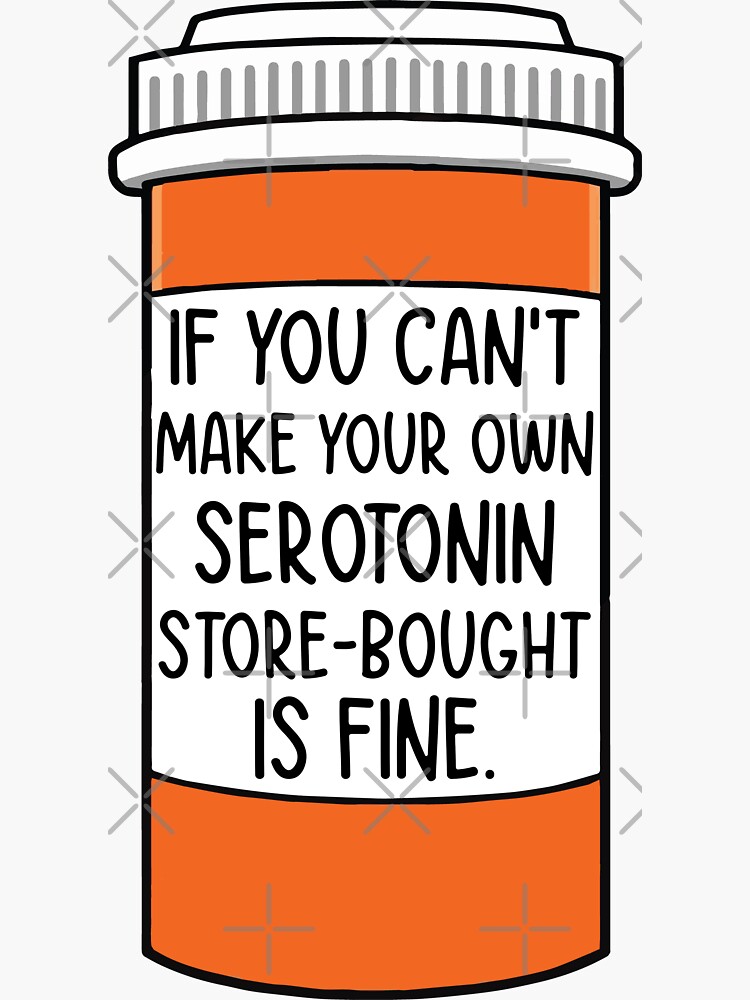
This strongly reminds me of depression and SSRIs, and the false explanation according to which people with depression have a serotonin deficit, and SSRIs work by increasing serotonin to normal levels. "Just like diabetics need insulin, depressed people need antidepressants", "if you can't make your own serotonin, store bought is fine", etc., there are a million memes like this one.

 if you can't make your own serotonin store-bought is fine Sticker

 Now, depression might, at least in a subset of patients, have something to do with serotonin, but the crude explanation above is almost certainly false. And when this falsity became more widely known, lots of depression patients who had been told this lie by clinicians felt deceived and betrayed. And then some clinicians said that this was obviously not meant to be taken literally, it was just a helpful story, a metaphor or myth. You even saw people victim-blaming their patients, suggesting that they should have understood that the simple neurotransmitter explanation wasn't supposed to be taken literally.

Look. When my very first psychiatrist prescribed me my very first antipsychotic pills (I think it was Fluanxol), I asked my very first psychologist - because she was the one I really talked to, and asked questions of - how antipsychotics work in the brain. The brain is such a big, complicated mess, thoughts and perceptions and emotions and all that stuff is also such a big, complicated mess - how can a pill possibly target the psychotic stuff only? The psychologist said it doesn't. She said treating psychosis with antipsychotics is more like hunting sparrows with a bazooka; you hope to kill some birds without tearing down too much of the forest. 
There are two things to say about the sparrow-bazooka metaphor here: First, it's obviously just a metaphor. Obviously, I don't have a literal forest with literal trees and literal sparrows flying around inside my brain. Second, it's blunt and honest. Did I feel disappointed at not getting a concrete, detailed, and reassuring neuroscience story about how the pills work? Yes, of course I did! Luck is 100% right when she says that people want to know why something works, not just that it often works and thus is worth trying. But at the same time, I truly appreciated my psychologist's blunt honesty.
When I first became a psych patient, I was pretty paranoid. Mostly about demon assassins, but also about clinicians. I suspected that they might still lobotomize people behind closed doors, even though they said it was a thing of the past, and I was scared to seek mental health care. It was only when a friend, who had been a patient there herself, vouched for them that I dared to reach out. I was still all kinds of jittery early on, but my psychologist's blunt honesty helped with that.  
And then, Fluanxol didn't work, so I got to try something else, and I had to go through this long trial and error with different pills before my psychiatrist finally struck gold with Haldol. This trial-and-error process was grueling, of course, but it would have been even worse if my psychologist had tricked me into believing that antipsychotics is a hard science and psychiatrists know exactly what they're doing. Now, I was at least somewhat prepared for how difficult and messy things can be. 

Yes, patients might be frustrated and disappointed if their clinician says they don't really know why something often works - it just does, and is therefore worth trying. They should still be honest! First, honesty is important in its own right. Treating people with respect, as equals, is important in itself, and telling people patronizing comforting lies is wrong in itself. Second, a strict consequentialist should still consider long-term consequences. I know that many clinicians like to believe that psychiatric patients never talk to other people, never read books on their own initiative and never uses the internet; they like to believe that they can fill the patient's head with whatever beliefs they like. But as the Andrew Cook quote above attest (and as everyone with two brain cells to knock together should realize), this isn't true. 
If clinicians lie to their patients, while telling themselves that they're not lying at all, they're just using myths and metaphors, the patients might feel better in the moment, but profoundly betrayed when they later learn they've been lied to. If you initially sold them a story of why something works, and they later learn that the story is false, it's pretty damn hard to switch to "oh, who cares why it works, as long as it does!" But if you're honest from the start - immediately tell them that we don't really know - lots of people might accept this, albeit, perhaps, begrudgingly. 

3. Could Feldman-Barrett's constructed emotions replace polyvagal theory? 

So, to repeat: my social media feed is currently full of therapists who wonder what they should replace polyvagal theory with, now that it's been debunked (or, alternatively, now when the age-old debunking finally gets the attention it deserves). My suggestion: Skip all this fucking neuroscience, which you're not experts on anyway. If a patient spontaneously brings up some neuroscience theory they read about and found helpful, sure, you can roll with that. But don't try to push a certain neuroscience theory on everyone. You can make do with just psychology. 

Therapists will say that patients need neuroscience to feel better. At least in our culture (roughly: modern, western and secular), people don't feel that their psychological problems are worth taking seriously unless they get a neuroscience story to go with them. Okay ... but if that is so, maybe you're job as a psychotherapist is to explain how wrong the premise is? Sure, you might be in the grip of a public health care system or insurance companies that demand a neuroscience story, and if so, you might have to feed them one to protect your patient. But you can still be honest about what you're doing when talking to said patient. 

But this seems really hard to accept for some therapists I've seen posting about the debunking of polyvagal theory. One suggested that they should replace this with Lisa Feldman-Barrett's constructed emotions - that's a much better neuroscience theory to push at patients!

Right. 

So, I read Feldman-Barrett's book "how emotions are made" years ago. I wanna stress that I don't have it fresh in my memory. But I do remember this much:

- She harshly criticizes research according to which there are various universal human emotions and universal facial expressions to go with them; she says these studies are seriously flawed.

- She instead proposes that all we have, pre-culturally and pre-linguistically, are high/low arousal and positive/negative valence. We don't have emotions before language and culture. Meaning that little children, non-verbal disabled people, or non-human animals, don't have emotions either. That's just projection.

I was, immediately, pretty negative when I read it. Then, I didn't really think about it for years ... until it popped up as a suggestion for which neuroscience theory therapists should push on their patients instead of polyvagal. I thought surely Feldman-Barrett must be scientifically controversial as well? I vaguely remember critics accusing her of just doing the strong Sapir-Whorf hypothesis all over again - language doesn't just influence but determine what you can think or feel - even though that has been debunked. 
Of course we're heavily influenced by language and culture, but the claim that there's nothing but high/low arousal and positive/negative valence until language and culture enter the picture is very strong. 

When trying to find the critique I was vaguely remembering, I found this instead , by Karolina Westlund, associate professor of ethology. Westlund freely admits to feeling personally offended by, for instance, Feldman's condescending tone and occasional sweeping, sloppy dismissals of researchers who don't agree with her. Still, Westlund's critique remains factual. 
A lot of it is evolutionary. An antelope who sees an approaching cheetah needs to have more than just high arousal plus negative valence to survive. Antelopes can't experiment with flight, fight, fawning etc. to see what works, they gotta fear cheetahs and flee right away. 

Feldman-Barrett, however, insists that animals don't feel fear, that's just anthropomorphizing. And this is so weird, because she also stresses that a good scientific theory must be able to account for all the data. Well, ethology used to proceed on the assumption that all non-human animals are quite simple. Ascribing emotions to them was a no-no (well, possibly not fear, possibly not everything, but researchers were really scared of anthropomorphizing!) But this was, eventually, a scientific dead end. Now, we have a huge body of research on, for instance, the fairly advanced cognitive and emotional lives of dogs and other non-human species. There's such a huge body of research that F-B must completely explain away if her theory is gonna hold up. It seems really implausible to me that this can be done. And I suspect (though I don't know much of this field) that the same is true for child psychology dealing with very small children - there's gonna be lots and lots of research that F-B must explain away if small children don't have emotions.

Westlund also cites some really weird claims that F-B makes in the book, such as how the Romans never smiled, because smiling with joy was only invented in the middle ages. Of course we don't have any evidence that the Romans never smiled. And although smiling with joy need not be universal, smiling to show benign intent likely is - our closest relatives do it! 


As far as I can tell, these are pertinent critiques. Plus, and now I'm getting thoroughly subjective, but the theory just didn't jive with me personally. I really don't recognize the experience of having bodily sensations and spontaneously sensing them as emotions. When I'm experiencing emotions, I tend to either don't experience them as located in any particular place, or, quite often, as being in my head. Note, I'm still talking about emotions, not thoughts, but they're in my head, not my stomach or chest or wherever they're supposed to be. 
I think they end up further down the body when I'm not really in touch with them, when I suppress them. I push them, so to speak, away from me (because I experience me as more in the head than the rest of the body, although the details vary over time). 

Years ago, when I was in a much worse place, I would sometimes get a racing pulse and constricted breathing. It would last for hours; when it finally subsided, I was, of course, exhausted. I told my then-psychiatrist that I had this annoying psychosomatic issue - I was certain all along that it was psychosomatic. 
He said I described an anxiety attack. I said no, that can't be right. I'm sure it's psychosomatic, but it's not anxiety - the only emotion I feel about it is annoyance. It's annoying that this thing keeps happening to me, and that I get so tired afterwards. 
Psych doc insisted it was anxiety and prescribed me betablockers for it (Propanolol), saying I should take 10-20 mg when this happened. They were absolutely ineffectual. I tried higher and higher doses until I took 140 mg at once, and still jack shit. I decided betablockers aren't for me and gave up.

This fall, I had a milder but still unpleasant sensation in my torso. Slightly tightened stomach muscles, slightly elevated pulse, and some hard-to-describe sensation precisely in the middle of the rib-cage. I figured it might be body-anxiety (as I've come to think of it), but if so, I didn't know what caused it. I tried to think of various possible stressors in my life to see if the sensation changed, became more intense, at any point - I thought if the sensation gets amped up when I think about X, then X is likely the cause. This diagnostic method didn't work. I thought about all the possible stressors, but the sensation stayed the same throughout. So I thought; nothing to do about it, then, except waiting for it to pass. Then, I went on a long conference trip, and once I was there, the sensation passed. I concluded it had been anxiety about the conference.

So, this is how I roll. When reading that book, I just felt that I don't fit into this framework at all. It seems to me that a therapist trying to use this theory with everyone would have a hard time fitting me into it. (I would also be pissed off at any therapist saying my dogs lack emotions.) But maybe I'm wrong; maybe Feldman-Barrett's theory is great. Which brings us to the following question:

 4. Should therapists push Feldman-Barrett on patients if we assume, for the sake of argument, that it is a great theory?

So. Let's assume, for the sake of argument, that F-B does have a great theory of emotionsand the theory is wielded by a therapist who's got the expertise to answer every critical question. Should the therapist, in these circumstances, push F-B's constructed emotions on all their patients? I still think they shouldn't. 

Suppose a patient talks about their terrible distress. The therapist says look, these are bodily reactions - high arousal plus negative valence - that you give a certain interpretation. But you could re-interpret them and move forward. We're the architects of our own experiences, like Lisa Feldman-Barrett says! As a matter of fact, emotions don't exist until we think about them and name them. There are no pre-cultural, pre-linguistic emotions.

The patient stares at the therapist in shock. She says: but what keeps me going is the thought of my son; he loves me, he needs me. I sometimes wanna end it all but then I think of my son and keep going. But now you're saying he doesn't love me, because he's got no emotions at all! He's only a year old! (Or, say, autistic and non-verbal.) Of course, he's got physical needs too, but anyone could fill those. If he doesn't have any emotional connection to me, if he doesn't have emotions at all, there's no point in struggling anymore!

Now, I've already stipulated, for the sake of discussion, that this is a great theory and that the therapist is an expert. So, let's say she's got a long answer to give as to why the theory doesn't have this implication (possibly having to do with the meaning of emotion, possibly F-B uses it in a much more narrow way than the patient ... possibly her son can have something which she calls emotion and that's fine). It seems, on the face of it, to have this implication, but actually, everything is fine. 

But even if the therapist is enough of an expert to explain all this, is it gonna be a simple enough explanation for a possibly uneducated patient to follow? In this story, the patient is clearly smart enough to spontaneously add two and two and draw out a (seeming) implication of the theory. But smart isn't the same as highly educated, and to understand more complicated theoretical stuff, you need education too. This is why you need to finish high school before you attend university, and take classes in a certain order while there. You can't just skip to the end of your university education, no matter how smart you are. So the patient might nod and smile (since she's not an ancient Roman, but a modern person, living centuries after the invention of the smile), while silently thinking to herself that her therapist said her son doesn't have any emotions, and now the therapist desperately tries to backpedal through a shitload of psychobabble.  

Now, someone might read this and think: Well, F-B's theory is good for most patients, since it fosters a sense of agency - we're the architects blabla - so I'll just continue to push it on most, while keeping silent about it for clients with strong feelings for a non-verbal child or a pet. But this is once again the fallacy of assuming psych patients don't talk to other people, don't read stuff of their own accord, and don't use the internet. 

Summing up: Stop pushing fucking neuroscience on psych patients because "it makes them feel better". If you're a psychologist, use psychology. You can still say that people can change. You can still talk about looping effects: how we interpret ourselves can affect the way we are going forward, which affects further interpretation, and so on. You can still talk about psychosomatic bodily stuff, even - without very detailed and/or controversial theories about the precise mechanisms. 

If a patient says they came across a neuroscience theory that was helpful to them, you can say good on you. If it's scientifically controversial, or even pseudoscience, you can say well, it's not literally correct, but if it's helpful for you to think this way, why not? (Being honest, not tricking patients into believing "useful myths".) 
If a patient says they came across a neuroscience theory that seems terrible - "I just read Feldman-Barrett to try to understand myself better, but she says my son has no emotions and doesn't love me!" - you could say either you don't have to interpret the theory that way (if that's a reasonable claim), or say it's scientifically controversial, you don't have to believe it. 

Only bring up neuroscientific theories if they're actually relevant. Either because the patient brings it up first, or because you really can't make do with just psychology. Even then, be honest about uncertainties and research gaps.  


Saturday, December 14, 2024

Psych drugs, food, and internalized stigma

 I had it bad this past week. Probably a bit overworked towards the end of the semester. Monday morning, when I looked in the bathroom mirror, my face looked completely skewed, like a Picasso painting. My first impulse was that I should paint it into a straighter shape with make-up. Then I thought: no, I should go about this face problem rationally. I should double-check what it looks like in other devices. I turned my phone to mirror mode and looked, and it was normal on the little phone screen. Then I turned on a Zoom meeting for one at the computer, and it was normal on Zoom as well. Only in the mirror did my face look fucked up. So I thought to myself: it's just a mirror illusion. Maybe stress-induced.

And then the week followed. For various reasons, I decided to still go to work even though I didn't do much. I had other bad experiences. I pulled out all the tricks in my bag to handle them (stuff I've written and published about, and then some). It was pretty bad, but now I'm much better. No big breakdown in the end, no disaster, I pulled through.

(I'm pretty active on social media, so maybe someone reading this thinks "huh, I've been following her all along and I had no idea!" Well, I don't like talking publicly about having it bad as it happens - afterwards is a different matter. If I talk about it as it happens I worry that people might feel sorry for me, and their sorry will make me feel sorry for myself and it's all gonna go downhill from there. "You become the way they see you" as Lovisa frequently thinks to herself in my upcoming novel and oh look how smoothly this transitioned into book promotion! Coghweel Souls in March 2025! Ok, back to the blog post topic.)

I pulled through this time, but after a week like this, it's still natural to think about medication. I quit my meds in 2018, but I've always said that if I absolutely need to one day, I'll get back on Haldol. 

People can be weird about Haldol. It's got this reputation of being an extremely strong and dangerous drug. Some people have asked me why on earth I've been given that terrible old drug instead of some of the nice new ones. On the flipside, a woman I met at a party and talked psych experiences with, said "wow, Haldol, that's the heavy stuff! That's the real deal! They only give me these new weak-ass meds, none of which works, how did you get your doc to prescribe Haldol?"
But the whole "Haldol was so bad and extreme and the new drugs are so much nicer" is mostly hype from the companies making the new drugs. At the end of the day, different people have different reactions to different drugs. Haldol worked best for me and that's why I was on it. 

It worked quite well for many years. For several decades, I was on it for much of the time, but not all the time. Occasionally, I would stupid-quit, because I felt good and thought I was cured. Sometimes I'd be alright for a pretty long time after, but then some stressful even would happen and set me off, and I'd be back in the psych system and back on the pills. In hindsight, maybe these stupid-quits had some benefit, though? Maybe they postponed the point at which Haldol just didn't work anymore, giving me only side effects but hardly any desired effect.
I hope that if I really need to get back on it one day, my brain will have rebooted after all the years off meds, and it's gonna work again. I don't think there's any actual science on this. I've asked a few psychiatrists I know through work and their educated guess or professional intuition or whatever you wanna call it is that it's probably gonna work again. 

However, I'd prefer to stay off it. And it's important to me that people understand that this is not because of "internalized stigma". 

"Internalized stigma" is a thing, sure. But I don't think that I have ever suffered from internalized medication stigma. Any stigma I've internalized have been directed at the madness itself, not the medications used to repress it. When I stupid-quit I was highly motivated to think that I wasn't mad, not that I'd be able to manage my madness without meds. These are different things. I definitely had a big chunk of internalized madness stigma, but it was very helpful to talk it out in therapy in 2019. (I went to therapy for my own money. Searched and searched until I found a place where they offered something other than just "CBT" and "job training". I contacted them and said I don't need fucking CBT, I need some serious fucking Freud shit! At the end of the day, I'm not sure if we did any serious fucking Freud shit, but we sure did more than CBT exercises, and it was great for me.)

Stigma against the antipsychotic pills rather than the psychotic condition does exist in antipsychiatry/critical psychiatry spaces. At their most generous, these people will say something like "I don't judge anyone for doing drugs to feel better, regardless of whether they drink, smoke weed, take psych drugs or something else". At their least generous, they will talk of psych drugs as literal poison and people who willingly poison themselves as completely duped. But among regular folks, these views are, in my experience, rare. Regular folks may think that people with common diagnoses like depression and ADHD should just pull themselves together and replace their pills with yoga or something, but psychotics are a different matter, they're bona fide crazy and should absolutely take their meds so they don't become homeless or homicidal axe murderers or both. 

Still, anti-pill views are real, and with common conditions like depression or ADHD, they seem quite common. So unsurprisingly, there's also a counter reaction and people who oppose the stigma. That's good, taking pills shouldn't be stigmatized, but sometimes, the anti-stigma people see stigma and internalized stigma everywhere. And that's what I'm gonna talk about in the rest of the post. People can be reluctant to go on pills for perfectly understandable reasons. It's not all "internalized stigma".

First, there's the obvious case of side effects. Towards the end, Haldol gave me on-off slurred speech because I lost control of my tongue, and visible facial ticks. Especially the tongue thing was really bad. But suppose that my brain really has rebooted, and if I went back on them, it would be like it was before, when they worked. Back then, I had pretty mild side effects. Dry mouth, but I retained good teeth in spite of that issue. I'm more worried about returning to a state of low creativity and being less smart and fast-thinking than I am now. Mind you, I was still able to work full-time as a scholar, I was in no way zombified by the pills. Still, looking back, comparing myself then to the way I am now  - it looks like a pretty high price to pay for peace of mind. It might be tempting to think that psychosis is a mental health matter and therefore intrinsically more important than things like creativity or smarts, which are just little luxury flourishes on top or something. But my mind is one, it's not divided into the health foundation and the capacity flourishes. There may come a time when I think going back on pills is worth it all things considered, but it would take a lot. 

Second, I don't want to depend on pills. And this is where some people really prick their ears and go "did I hear someone voice their internalized stigma?" In particular, I've seen a few different people, as far as I can tell wholly independent of each other, make a comparison with food here. If you don't feel bad about depending on food, but you do feel bad about depending on pills, this goes to show that you're guilty of internalized stigma! You should get over it already and take your pills just like you eat your food. 

First a word of why I would depend on the pills if I went back on them: In theory, it might seem like I'd be maximally protected against any looming psychotic breakdown if I were to combine pills with all my self-invented coping mechanisms that I've talked and published about. In practice, that's unlikely. I could retain all the epistemological frameworks I've developed to prop up this flimsy world of mine and make it feel sturdier, but lots of mental actions I perform - like deliberately dissociating in quite specific ways, or conversing with helpful voices - would likely be rendered hard or impossible when on pills. Moreover, in psych treatment, the pills tend to be framed as your number one crutch and anything else as just a complement. Hard not to fall into that way of thinking, if that's how clinicians constantly frame things.

So, I would depend on the pills if I got back on them. And it's different from depending on food.
I feel fine depending on food because food just works for me. I eat some food, and I get nutrition and energy from it. It works.I also felt fine being on Haldol back when Haldol just worked.
However, when I first became a psych patient, I had to go through a trial-and-error process with a bunch of different pills before we found something that worked (very common experience). That trial-and-error process was extremely frustrating. Doc prescribes a pill. You take the pill. You wait to see if something happens. It doesn't! Too bad. Doc prescribes another pill. You take the pill. Wait to see if something happens. It doesn't, not with this one either! Too bad. Etc. 
Finally, we struck gold with Haldol. As I said above, it worked well for many years. But when it stopped working, that was also frustrating and frightening - will my life just fall apart now? 

One thing that's particularly frustrating is how passive you are in relation to the pills. If you're trying out various mental tricks to help you deal with shit, you're actively doing something, you're performing these mental actions. If something doesn't immediately work, you can try doing it a little differently, try harder at it, and so on. With the pills, the only thing you actually do is swallowing. After that, you have no control over what happens. Stomach acid dissolves the pill, the little chemicals go out in your blood stream, past the blood-brain barrier, attach themselves to little receptors up there - or, at least that's what's supposed to happen. Whether it does, isn't up to you. It works, or it doesn't work. If it works, that's great. If it doesn't, you can only lament this fact, and maybe go back to the trial-and-error process, or adding more pills, and hope that they will do what they're supposed to do, once again just hoping.
And yes, eating food has the same passive, non-controlled element to it. I can't affect what happens with the food once I've swallowed it (at least not in a big way - maybe I'll get better digestion if I take it easy after a meal, but I can't do anything major about it). This is no problem to me because it just works. However, if it didn't just work, then it would be a problem. 

Imagine that I develop Type 1 Diabetes. Extremely unexpected at my age, but imagine it happens. I notice that food doesn't work anymore. My body is supposed to break down the food and extract energy from it, but now it doesn't anymore. I eat and eat, and yet I become increasingly fatigued and emaciated. Let's make the thought experiment even worse! It's not diabetes, so insulin doesn't help. It's similar symptoms, but there's nothing the doctors can do for me. My body is supposed to get energy from food, but the system doesn't work anymore, and it's nothing I can do about that - I can hope that things get back online, but as of now, I can only helplessly watch as all the food I stuff in my mouth goes straight through without doing anything for me.
This would be a serious problem! Not because of "internalized stigma", not because I have an attitude problem around food, but because food doesn't work for me anymore and I'm helpless to do anything about it.
Similarly, it's a real, tangible problem - not just internalized stigma or a bad attitude or whatever - to take pills that just don't work for you. One might argue that feelings of helplessness and despair don't make the situation any better, so you should still try to get over them. Perhaps (though even this can easily veer into problematic toxic positivity territory). But these feelings would nevertheless be caused by quite tangible problems. 

Haldol stopped working for me once. If I went back on it, I would be acutely aware of the fact that it happened once and might happen again. I could only hope that it wouldn't happen again, but there would be nothing I could do to prevent it - when a previously effective medication stops working, it's presumably because of physical, neurological changes in the brain (there's some science published on this, though AFAIK, lots of uncertainties remain), and I have no control over whether my brain will grow extra dopamine receptors or similar. Real problem right there. Not just "internalized stigma".

Third, dependency makes you vulnerable. It makes your situation precarious. And yes, sure, vulnerability is part of the human condition and all that, but I still don't want to take on extra precariousness if it's at all possible to avoid.
Even if the pills work for you, they can only help you if you get them. But access to prescription medication has become far less reliable over the years. This is because of political problems, of course. We should fight for political change. But in the meanwhile, this is a real problem for people on meds, and a rational reason to try and do without if you can do without even if it's hard sometimes. 

I don't worry about being dependent on food because I can reliably access food. Of course, this isn't a privilege that everyone has. Insofar as on-off-starving people (people living with "food insecurity", to use the established euphemism) don't think of themselves as problematically dependent on food, it's probably because everyone needs to eat. One might lament depending on pills that may or may not be available next week, next month, and so on, because one is surrounded by people who don't have to worry about this, but everyone must eat.

However, imagine that breatharianism was a real thing. There are these mumbo-jumbo gurus who claim that they don't need to eat, they can survive on just air and sunshine or what-not. Imagine this was a real skill that some people developed; maybe there were quite a lot of breatharians around. In this hypothetical scenario, I imagine lots of poor and on-off starving people, who tried to go breatharian but couldn't for some reason, would envy those who could. And we don't need to posit an internalized eating stigma to explain why; breatharians' lives would simply be less precarious, they'd have one less serious problem to worry about. Even if the right thing to do is to fight for political change rather than individualize the problem and do breathing exercises for all, someone who could develop the breatharian skill might be rational to do so. If they're gonna get politically active, it will be easier if they're not simultaneously starving. In any case, no need to appeal to internalized stigma over food to explain what's going on here. 

To sum up: Internalized stigma is a thing. It's worth discussing. But in my experience, it gets over-used. Suggesting that there are no real problems associated with being on pills, only attitude problems and internalized stigma, is actually not so different from saying that mental problems aren't real problems, people just need to get their shit together and improve their attitude.

Monday, March 18, 2024

John Z. Sadler's Vice and Psychiatric Diagnosis

 My impression is that people who are neither moral philosophers nor psychiatrists or psychologists tend to think that there's a sharp line between "vice" and "psychiatric disorders" - or, colloquially, between the bad and the mad (note, I don't know of any empirical research that investigates this very matter, this is really just my impression). My impression is also that people are quick to assume that there's a limit to how bad someone can be without also being mad. But perhaps not the other way around. 

Philosophers who work on moral responsibility and moral agency tend to assume this as well. I think all this drawing of lines and placing people in neat boxes is a fundamentally misguided way of looking at moral responsibility, but it's nevertheless the common and traditional way. Neurotypical people are morally responsible agents. Psychiatric and neuropsychiatric diagnoses, on the other hand, frequently undermine moral responsibility, and place people in the "exempted" box. Some philosophers like to divide moral responsibility into different subkinds, and play around with what kind of responsibility you can have with this or that diagnosis, even as you're exempted from the other kinds. 

The moral landscape would certainly be a neater place to navigate if there really were sharp lines between the mad and the bad. Sharp lines out there, so to speak, in nature - but alas, there aren't. And that's the main topic for Sadler's book. 

More than half of the book is taken up by a loooong journey through time, and also, to some extent, through different cultures and different parts of the globe. People have struggled with the mad-bad distinction everywhere and for ages. And they still do! We still don't have a scientifically and philosophically well-grounded theory! This isn't because the mad-bad border is hard to find, and our science and/or philosophy isn't sufficiently well developed yet. It's because there isn't a sharp border. Sure, lots of people may be categorized as purely mad, or as purely bad (though as the reader of the book will see, the latter has, in modern times, been more controversial), but we'll remain stuck with a big grey area.
Sometimes, this grey area has given rise to "vice-laden" DSM diagnoses, like Conduct Disorder, Oppositional Defiant Disorder or Anti-Social Personality Disorder. Sadler calls these "vice-laden", because the diagnostic criteria is moralizing in a way that the criteria for, say, Schizophrenia or Major Depression are not. At other times, after discussions and debates, behaviours remain "just bad" rather than "bad and mad": Intolerant Personality Disorder, Behavioural Addictions (apart from gambling) such as addiction to sex, shopping, or social media, Political Apathy Disorder, and Paraphilic Rapism never made it into any diagnostic manuals. Sadler, only half-jokingly, suggests that White-Collar Antisocial Disorder, or, as we might call it, the Bernie Maddoff syndrome, could be a psychiatric diagnosis - why should only criminals from the lower social classes be pathologized? 

Way too many moral philosophers assume that the business of coming up with psychiatric diagnoses and applying them to individuals is a much harder science than it actually is. If someone has a bona fide diagnosis which includes descriptions of moral vices and vicious behaviour, it goes to show that it's not the person's fault, and they can't be morally responsible. If there's no diagnosis that covers their character traits and behaviour, they are responsible and blameworthy. Or so many philosophers seem to think.
Some people also like to appeal to neurological findings - people with this or that diagnosis have different brains! But every mental difference must have some corresponding brain difference - regardless of which mind-body theory we subscribe to, regardless of whether the mind is identical to the brain or if it supervenes on what happens in the brain or even if we're fancy old-fashioned dualists who think it's just correlation, it follows that every mental difference has some corresponding brain difference. You can't just point to "a brain difference" as evidence of undermined moral responsibility. Nor can you point to "a brain difference" as evidence that people with this or that diagnosis can't help their vices, unlike undiagnosed vicious people.
In our world, you can have Oppositional Defiant Disorder, but not White-Collar Antisocial Disorder. In a nearby possible world, in which human psychology works exactly the same, but psychiatry had a somewhat different development, it's the other way around. 

So, let's admit that psychiatric diagnoses and the mad/bad distinction is a huge bloody quagmire. What are we supposed to do? Sadler ends his hefty brick of a book with no less than forty theses of what ought to be done, society-wise, in light of this realization. He very nicely divides these theses into stuff we could do immediately and more distant, long-term goals.
As I said, it's a huge book, and I can't even begin to do everything justice in a blog post. But an overarching theme of the forty final theses is to ditch the attempt to find a neat mad/bad divide. Psychiatry should admit and discuss more explicitly than has hitherto been the case how value-laden it is, and how value-laden it must be. An open discussion allows for scrutiny and criticism of underlying values, instead of implicit acceptance. Also, we shouldn't divide criminals into the bad who deserve punishment and the mad who should go to forensic psychiatry (though very few perpetrators of serious crimes do so in the USA, the insanity defense is rarely invoked and even more rarely successful). We should rehabilitate as many as possible so they can be released back into society, and permanently dangerous people should be kept in humane confinement. The mad/bad distinction is ultimately irrelevant.

This is obviously extremely controversial. I'm not sure what I ultimately think of this idea. Let's say I'm somewhat sympathetic, because Sadler is so very aware of all the problems and pitfalls that come with this suggestion, and discusses them at length.
Both psychiatry and criminal justice institutions in various countries and time periods have played thought police, and have locked people up under the guise of either punishment or treatment/rehabilitation because they have the "wrong" ideas, dare to challenge old social norms, and so on. This is a serious danger, though it exists even when psychiatry and criminal punishment are kept separate. The goal of any rehabilitative program must be people that aren't dangerous to others, not to turn everyone into "normal" people who think the "right" thoughts. 
Perhaps there is even a greater risk for abuse when the systems are kept separate - it's so easy to justify abuse of prisoners by painting them as evil and thus deserving of everything they get, and simultaneously justify abuse of psychiatric patients by painting them as so irrational and confused and utterly different from normal people that what would count as horrible violations of a normal person is okay, or at least not all that bad, when done to "those people". Also, no need to listen to any complaints they have, since they don't know what they're saying anyway.
Generally, Sadler shows so much more awareness of potential problems with treatment and rehabilitation than many philosophers who write about these matters. Way too many philosophers are acutely aware of how harmful punishment can be, while utterly oblivious to the horrors that often befall people after they have been declared incompetent and exempt from responsibility. 

Regardless of whether one agrees with Sadler's radical conclusions, everyone should agree about the importance of an open discussion about these matters. There's no dividing line between the mad and the bad "out there" for us to discover. And history shows how difficult it is to construct a non-arbitrary line. 

So, this is a positive review. I recommend the book to all philosophers working on these topics, and to everyone else who researches or is simply interested in psychiatry and criminal justice. Or more broadly human nature.

After the recommendation, a reservation: Sadler contrasts common "folk-psychological" explanations of behaviour in terms of beliefs and desires with proper scientific explanations. Then he compares this distinction to the distinction between Newtonian physics and later scientific theories like special relativity and quantum mechanics. Folk psychology and Newton work well in everyday life, but when there's lots at stake and we need to be extra careful, they sometimes need to be replaced with more detailed and complicated theories.
Now I'm in deep water here since I'm not an expert on physics. Nevertheless, all physical explanations seem to me, ultimately, the same kind of explanation. They're all purely causal, tell us what causes what. Now, purely causal explanations may or may not conflict with each other. A biological explanation in terms of cellular events, a biochemical in terms of molecules, and a physical that zooms in on atoms need not conflict, since they take place on different levels of explanation. But causal explanations can conflict with each other. I take it that Newtonian physics actually conflict sometimes with relativity and quantum mechanics. When it does, we may say that Newtonian physics is less detailed but still has its place in everyday contexts where it's sufficiently precise for the purpose at hand, whereas we might need more detailed theories in other contexts.
Reasons explanations, on the other hand, are a different kind of explanation to causal explanations. "Folk psychology" is a loose term, and may involve more than reasons, but insofar as reasons are what we focus on - reasons may justify or not, show that you're action was rational or not, show whether it was moral or not ... Reason explanations are a different kind of explanation. They differ from all causal explanations, whether these causes are understood within a psychological, sociological, neurological, or other framework.
If I explain why I did what I just did by referring to my reasons for doing it, while a bunch of empirical scientists who study me provide causal explanations, the difference isn't that I give a rough and sloppy explanation whereas their explanations are detailed. We're looking at my action from completely different angles.
However, I might over-interpret the point that Sadler wanted to make with his Newton-relativity-quantum comparison. It's possible he agrees with everything I write here, in which case it's more of a comment than a reservation.

Now, I'm gonna nitpick. 

Sadler discusses - and obviously, he's not alone in this, these discussions are common - whether to say, e.g., "I have schizophrenia" or "I'm schizophrenic". The "am" vs "have" debate, "people first" vs "identity" language. He contrasts how people often say "I am" with regards to psychiatric diagnoses, with the "I have" language we use for physical health problems like cancer or a broken bone. Then, he says that this isn't all that weird, considering how intertwined a psychiatric condition may be with one's personality. 
But
a) it's not true that we say "I have" about all physical health problems, it differs from condition to condition, and
b) it's also not true that "I am" language, generally, implies that something is an important part of who I am.
Obviously people don't say "I am cancer" because "cancer" is a noun, you can't say that unless you're the personification of cancer itself, some kind of disease god or other supernatural entity. Similarly, people don't say "I am schizophrenia" or "I am depression". Now, with cancer, people don't usually say "I'm cancerous" either, but there are other physical health problems where "I am" language is common. "I'm diabetic", "I'm HIV-positive", "I'm lactose-intolerant", etc. In English, we say "I have a cold", but in Swedish, we say "jag är förkyld" - roughly, "I'm over-chilled".
Also, if we look at features other than health problems, we habitually use "I am" language about tons of things that aren't important parts of our personalities or who we are. "I'm medium blond", "I'm 169 cm tall", "I'm a Star Trek fan", and so on. In both English and Swedish, people are this or that number of years old and they are hungry if they haven't eaten for some time, whereas in Spanish and French, people have their years and have hunger. Surely these are random language differences that don't matter for how speakers conceive of their ages and states of hunger in relation to their personalities and identities.
And yet, in mental health contexts, people suddenly make a big deal out of "I am" vs "I have", as if these expressions have all these linguistic implications. Well, I guess "I am" vs "I have" have strong linguistic implications in the specific context of mental health now, because so many people have made such a big deal out of it for so long. But why did this come up in the first place? Given that "I am" vs "I have" don't have any interesting implications in language in general?
I can only assume it's because lots of people think it's horrible-horrible-horrible-shameful to have a mental health condition, and therefore they suffer intense second-hand shame every time they hear someone openly say, e.g., "I'm schizophrenic". If you're gonna talk about it, could you at least try to distance yourself from that horrible condition as much as possible?
If this was a peer-reviewed paper rather than a blog post, the imaginary peer reviewer would have this to say:
"That doesn't make any sense. You claim that there's no interesting distinction between 'I am' language vs 'I have', outside of mental health contexts and the special norms that have been created there by people who 'make a big deal out of it'. But if you're right about this, saying 'I have schizophrenia' wouldn't have signaled more detachment than saying 'I'm schizophrenic' until these special mental health language norms were already in place."
Fair enough, imaginary peer reviewer.
Anyway, it's weird. This entire insistence on "have" over "am" in mental health contexts is hella weird, let's just leave it at that.

Finally, philosophers who read this book may find some little annoyances here and there, where Sadler's terminology doesn't align with ours. For instance, at one point, he talks about adherents of retributivism who are  "couching the concept in the context of utilitarian ethics".
This reads as somewhat philosophically confused. Utilitarianism is the view that an action (including the act of punishing a criminal) is right if it maximizes utility (traditionally understood as happiness) and wrong otherwise. "Desert" has no place in utilitarian theory, except, perhaps, as a derived and pragmatically used term. Utilitarians since Jeremy Bentham and onwards have focused on the role that punishment allegedly has in deterring criminals from re-offending and deterring potential criminals from offending in the first place (something Sadler also recounts in his book). Retributivism is a different theory, according to which criminals should be punished because they deserve it.
Now, it's possible to hold a mixed theory, according to which we have several different reasons for punishing criminals; they deserve to be punished, and it's great if we can deter people from crime. Stephen Morse and others have pointed out that real-life politicians often freely mix appeals to an alleged deterrence effect and appeals to desert when they argue for harsher punishments. Nevertheless, claiming that we have both deterrence reasons and retributivist reasons to punish criminals is very different from saying that deterrence is a reason for retributivism.

Still, this was a very minor nitpick. Overall, I recommend this book. Agree with Sadler or not, he does raise some really important questions.

Friday, December 22, 2023

Review: Robert Chapman's Empire of Normality: Neurodiversity and Capitalism.

Everyone has problably witnessed, or even partaken in, debates over neuropsychiatric conditions like autism and ADHD, or common psychiatric conditions like depression and anxiety disorders. Why are so many people diagnosed these days? And then you get two camps who offer two radically different answers to that question.

First, you've got the camp who says that there's rampant over-diagnosis going on. People get diagnosed on really flimsy grounds these days. Does seven-year-old Timmy find it difficult to sit still in school? Slap an ADHD diagnosis on him, and fill him with stimulants! In the good old days, we knew that this was perfectly normal - lots of kids find school boring and have trouble sitting still, but nowadays, they all get diagnosed. Does little Lisa have trouble making friends? Is she, well, just too nerdy for her own good? Autism! No one is allowed to just be a little nerdy and a little weird these days, it's gotta be autism! Did Annie cry her eyes out after her boyfriend broke up with her? Depression! Bring on the SSRI pills! 

Then we've got the other camp, protesting that it's not all that easy. They point out, quite accurately, that most struggling kids and their parents, most suffering teenagers and twenty-somethings, has to suffer and suffer and fight and fight to get diagnosed. It often takes ages before someone can get access to medications and/or special accommodations. Much less accurately, they'll insist that just as many people struggled in the past, only then their struggles weren't recognized as legit by the mental health care system. Instead, the "pro diagnosis camp" claim, the kind of people who nowadays get diagnosed with ADHD/autism/depression/anxiety were labelled freaks, changelings, witches, or they would be locked away in institutions, or they would just go kill themselves.
This is plain false.
About 10% of US childrens are diagnosed with ADHD. Almost 3 % are diagnosed as being on the autism spectrum. Over 18 % of the US population are, at some point in their lives, diagnosed with depression. And these are just three common diagnoses - there are so many other psychiatric and neuropscyhiatric conditions. Of course, there's plenty of diagnostic overlap - you can't just add these numbers up. Nevertheless, the Johns Hopkins institute estimate that 26% of all Americans have one or more mental health conditions, and the WHO estimate that the same goes for 1 in 8 people worldwide. Thus, when the "pro diagnosis camp" claims that the same people who would have gotten diagnosed today, were labelled witches and burnt at the stake or institutionalized in horrible conditions or simply killed themselves in the past, this is blatantly false - it's not the case that 12-26% of the population regularly suffered these fates, until modern psychiatry came around to save us.

However, the idea that either there's rampant over-diagnosis and people are diagnosed and treated on the flimsiest grounds, or else the number of people with (neuro)psychiatric disabilities remain constant through time whether they get helped or not, is a false dichotomy. Chapman argues, in Empire of Normality, for a third option: present-day capitalist society keeps raising the bar for how productive, efficient, socially competent, focused, and overall how normal you gotta be to keep up. As the bar goes higher and higher, more and more people fall below it, which results in actual, serious suffering and struggles.

I've occasionally seen radical disability activists claim that disability as a concept didn't exist until the industrial revolution. This claim seems both weird on the face of it, and contradicts some historical research I'm acquainted with. Chapman makes the somewhat weaker and much more plausible claim that with the industrial revolution and arrival of modern medicine, the view on disability became much more streamlined. In pre-industrial society, people who would be considered disabled today could sometimes find themselves a niche on the farm where they got along just fine - for instance, a blind or deaf woman might still be able to do traditional female farm chores. Other people might be considered scary freaks or just plain useless - whereas some disabled people were seen in a positive light, as having a special connection to God, and subsequently getting an extra privileged treatment. In short, it varied wildly.
With the industrial revolution and the arrival of modern medicine - the latter of which, Chapman hastens to stress, did save countless lives and drastically improved the quality of life of many - the view on disability/normality became tightly connected to productivity in standard work conditions. If you weren't fit to work a normal job at a normal pace, you were broken and bad. 

Even today, many medical diagnoses, in particular within the psychiatric realm, are explicitly defined in terms of distress and dysfunction - and the latter, in turn, tied to your (in)ability to work a normal job and/or study in the normal educational system. If you can't do this, at least not without special help and special adjustments, you're deemed disordered or disabled. A natural consequence is that more and more people will be judged disordered or disabled as the demands go up, up, up. Thus, both these things can be true:
1. It's very difficult to get a (neuro)psychiatric diagnosis, and get access to medication, special accommodations and other kinds of help. You need to suffer and struggle quite seriously first.
2. Many, many people who get diagnosed today wouldn't have qualified for a diagnosis if they had been born fifty or a hundred years ago - they'd have been considered normal back then.

Now, popular media do sometimes publish optimistic articles about how employees with autism and ADHD might help companies increase their productivity. People who have trouble managing many jobs and many social contexts might find their special little niche in which they thrive and help their employer make more money. However, this will never apply to more than a small subgroup of all people with (neuro)psychiatric diagnoses. There will still be an ingroup of people deemed useful and productive by our capitalist society, and an outgroup deemed useless and costly, because they demand all this extra help and special accommodations and mental health care. To really change this ingroup-outgroup dynamic - rather than just move a few individuals from one group to the other - we must change society quite drastically.  

In a capitalist society obsessed with productivity and making more and more money, Chapman writes, there is an inherent tension:
On the one hand, the bar for how socially competent, cheery, stress-resilient, flexible, fast-thinking, hard-working, etc. etc. employees must be, keeps rising. This means that over time, fewer and fewer people manage to reach the bar, and thus fewer and fewer people are considered normal/neurotypical. More and more people are diagnosed with a neuropsychiatric disability because they fail to live up to society's demands, and/or diagnosed with a mental illness as the ever-increasing demands causes them to break down.
On the other hand, a fiercely competitive capitalist society can only afford a certain number of sick and disabled people, can only afford to let a certain number of people live on welfare, can only afford a certain number of employees to get special accommodations and a certain number of students extra help in school. 

So far, the neurodiversity movement has operated largely within a liberal, rights-based framework, and for some time, people made progress by insisting that neurodivergent people should be seen as a marginalized group that require equal rights. But nowadays, this progress seems to have, by and large, come to a stand-still. More and more parents of neurodivergent children as well as adults with (neuro)psychiatric diagnoses find that it gets increasingly difficult to get the special help and accommodations that you're legally entitled to on paper. Now, many people seem downright puzzled by this development. They seem to think it's just some large accident that this happens, and that it should be possible to correct without any large-scale changes to society.

No. This tension is built into our present-day capitalist system. It's built in both that more and more people qualify for diagnoses because they simply can't manage the normal school system or normal job market without all kinds of extra help, and that this extra help will be denied them, because there's a limit to how many ill or disabled people the system can afford. 

Chapman, unfortunately but understandably, doesn't give us a recipe for revolution towards the end. But step one is to, at least, recognize that this tension is built into capitalism. It's not something we can just fix by providing people with better information about various diagnoses and neurodiversity. Some kind of more thorough-going societal change must take place.

I recommend this book to anyone interested in issues of neurodiversity, psychiatry and capitalism.

Wednesday, August 23, 2023

Antipsychiatry

I debated whether to call this post "antipsychiatry" or "critical psychiatry". Hardly anyone label themselves "antipsychiatrist", at least not these days. It's mostly a term very conservative psychiatrists and psychologists use to smear everyone who disagrees with them. But "critical psychiatry", which is something people do use about their own work, seems a bit too broad. We can think of "criticism" as existing on a scale from those who see systematic problems in psychiatry and the need for some reforms, over those who see the need for very extensive reforms, to those who basically want to tear the whole system down and can properly be called "anti". I want to look at those who are more towards the "anti" end of the scale in this post.

Psychiatry needs criticizing

1. Bad doctors 

Psychiatry absolutely needs criticizing, and there are absolutely systematic problems in the field that cannot be explained away as isolated incidents. I've met some wonderful doctors both as a patient and as a scholar, but there are also many who treat their patients badly, not just "a few bad apples" here and there. 
There are psychiatrists who think that there's no need to listen to their patients or take seriously what they say since they're crazy anyway. Some may have an okay attitude to some patient groups, while being horribly dismissive to, e.g., BPD patients and people with schizo diagnoses. Many psychiatrists serving in mental health tribunals believe that any patient who disagrees in any way whatsoever with their doctor thereby exhibits "lack of insight" (Susanna Radovic has done research on this). Psychiatrists can be very dismissive of patient complaints about medication side effects, even when these cause terrible suffering. Patients may get more and more diagnoses and more and more meds prescribed until they're basically zombies.

The last problem - loads of diagnoses, loads of meds - need not stem from dismissive attitudes towards patients, but an honest desire to help. A psychiatrist once told me that he suspected something like this often goes on: the psychiatrist tries one treatment after the other for the initial diagnosis, but none helps. Both doctor and patient feel frustrated and desperate. When the doctor tells the patient "hey, I think the problem might be that you actually have X in addition to Y! I'm gonna prescribe you a medication for X too!" both of them feel better and more hopeful. But after a while, when the patient still hasn't improved, they feel frustrated and desperate again ... until the doctor once again goes "hey, I think the problem might be that you actually have Z in addition to X and Y!" and they feel momentarily better. And so the vicious circle continues.
Moreover, present-day diagnostic manuals stress what's most unique about each diagnosis, rather than what's most typical. (Mads Henriksen held an interesting presentation about this at a conference I attended earlier this summer.) It is, for instance, very common and typical for schizophrenia patients to suffer from anxiety. But anxiety is hardly unique for schizophrenia - diagnostic criteria instead stress more unusual symptoms like hallucinations. Therefore, psychiatrists might think that a schizophrenia patient who suffers from anxiety has an additional condition - an anxiety disorder - which requires additional medication. Similarly, it's very common and typical for schizophrenia patients to have difficulties with focus and motivation. But psychiatrists may think this means that the patient also has ADHD, and should get ADHD meds on top of the antipsychotics (that is, a medication designed to increase dopamine flow in the brain in addition to a medication designed to block dopamine flow ...). 

There are also common problems with how psychiatry is depicted in mainstream media and social media. 

2. The modern humor theory

There is legit research on how various psychiatric symptoms may be connected to various brain phenomena and brain events involving various neurotransmitters, but it's all very complicated. However, in popular media and social media, we often encounter a kind of updated humor theory of mental disorders.
In antiquity and the middle ages, people believed that the body has four primary fluids or humors - blood, phlegm, black bile and yellow bile. When these are properly balanced, you're healthy, but imbalances lead to both physical and mental problems. Today, people talk about serotonin, dopamine, perhaps oxytocin and adrenaline too. They must be balanced - if they're imbalanced, mental problems result. The role of the psychiatrist is presumably to prescribe medications that rebalance the different neurotransmitters in the brain. Related to this is the bullshit analogy between diabetes and depression, and insulin and antidepressants.
Many psychiatric patients (perhaps mostly depression patients and people who take meds for ADHD) embrace and spread this modern humor theory because they've been told that they're just lazy and should pull themselves together - saying that they have a chemical imbalance in their brains which is comparable to diabetes is their way of pushing back against the laziness accusations. However, people who believe this theory and believe that psychotropic drugs are like insulin for diabetes will also believe that everyone with a psychiatric diagnosis must be on meds, that it's self-destructive not to. This isn't great either. Especially psychosis patients are often pushed to take meds even if the meds don't work, or even if it makes them all-things-considered worse off, and dismissed as too crazy to understand their own good if they object. I'm not saying that people never quit their meds for stupid and ill-considered reasons - in the past, I have myself quit antipsychotics on a number of occassions because tralalala, I feel so good now, I must be cured! But people also quit them for rational reasons, like I did five years ago, after carefully considering the pros and cons and my whole life situation.

The modern humor theory is compatible with all kinds of explanations of what causes them to go imbalanced in the first place. However, there's a widespread tendency to think that if your brain humors are imbalanced, that's really just a quirk of your brain. Perhaps environmental factors may play some small role, but it's mostly just about what's inside your skull, not about your environment. This is both very problematic and very unscientific - personal trauma, family dysfunction, abuse, poverty, job stress, being PoC in a racist society, etc., are all important causes of psychiatric problems. There's plenty of research on this, but popular media and social media tend to focus on humors and genes. 

3. Just get help

People often say that those who suffer and struggle should just "seek help", with the implicit assumption that everyone can be helped and get better if only they choose to. But even if you find a wonderful psychiatrist, the meds might not work, you might be a so-called "non-responder", you might be unable to recover because of shitty life circumstances that you and your psychiatrist are equally helpless to do anything about, and so on. And there is absolutely no guarantee that you manage to find a wonderful or even descent psychiatrist - a shitty one might be worse than having no professional mental health care at all.
The assumption that people who continue to struggle and struggle basically have themselves to blame for not "seeking help" - like, don't they know that there is help to get - is harmful.

To sum up: There's plenty to criticize. But.

BUT

1. Antipsychiatry and the problematic contrast between psychiatry and somatic medicine

Antipsychiatrists like to argue that psychiatry is radically unlike all somatic medicine. Whereas all somatic medicine is super scientific and objective, with reliable diagnostic methods, obvious borders between "healthy" and "sick", not value-laden at all, psychiatry is unscentific, subjective, unreliable, and all about society's values.
Robert Chapman has published at length about this, but here goes the short version: No. Somatic medicine is not all that antipsychiatry cracks it up to be. Psychiatry needs criticism, but somatic medicine does too!

"Somatic medicine" has many subfields and deals with many different kinds of conditions. Some areas might fit the description antipsychiatrists give better than others - for instance, if someone has a bacterial infection we might be able to determine exactly which bacteria it is and which antibiotics will kill them. We might be able to draw a definite line between those who suffer from this infection and those who don't. But grey areas between healthy and ill are everywhere. When is a hairline fracture in a bone an actual medical problem? When does a little menstrual pain turn into a medical issue? Debilitating back pain is one of the most common physical medical problems, and also one that we can't reliably diagnose except by talking to the patient about their problems. There are some weak correlations between debilitating back pain and stuff you can see on a spinal X-ray, but only weak ones - just like you can see some weak correlations between certain detectable brain events and psychiatric problems.
Generally, anyone who says that there's a clear-cut, objective and non-value-laden difference between what's healthy and what's pathological in somatic medicine thereby shits on the entire field of disability studies. 

2. Anti-psychiatry and dismissing people's lived experience

People have very different experiences with psychiatry, ranging from terrible and in itself traumatizing to positive, helpful, even life-changing. However, just like painting all of psychiatry as great and helpful dismisses many people's negative experiences, painting all of it as shitty dismisses positive experiences. 

I'm not saying that people can't be mistaken about their own experiences, that they can't be caught up in "false consciousness", that they can't fail to see that some system they're deeply caught up in actually oppresses and hurts them. What I am saying is this: The burden of proof should be placed on the person who wants to dismiss people's own narratives as mistaken. 

This goes for medication too. People can be mistaken about the effect a certain medication has on them, that's why we do double-blind randomized trials. But once again, the burden of proof should be on the person who claims the pill-taker is mistaken about the effects of the pill. If I believe in homeopathy and insists that sugar pills have a dramatic effect on my health because of water memory, I think it's fine to dismiss my story based on science in general. But if I take a pill that we know does stuff to the brain, the burden of proof should be on the person who insists that I'm wrong about how it affects me mentally.

I was on antipsychotics for many years. We know that their effects vary a lot from person to person (unfortunately for both doctors and patients, since it's tough to go through lengthy trial-and-error periods looking for a medication that does its job without intolerable side effects). I'm sure there's a sizeable portion of the psychotic population for whom all antipsychotics do is numb them down, but I'm also pretty sure that's not everyone.
When Haldol lost its desired effect on me, I desperately compensated by taking more and more Xanax. Xanax, a benzodiazepine, does numb me down. It extingiushes all my worries, and if I took enough, I wasn't scared of my demons anymore. But Haldol, for quite a lot of years, took the demons away with only a little numbing. Actually, I used to think that it didn't bring me down at all, but after I quit them, I realized that wasn't true. I became more energetic, more creative, more fast-thinking, off Haldol than I was on them. Nevertheless, they were very different from Xanax in their effect on me. I could work full-time on Haldol with no demons - whereas getting rid of the demons, or at least the demon fear, with Xanax, required getting pretty damn drugged.
Now, an antipsychiatrist who claims that I am deeply mistaken - actually, Haldol did nothing but numb me as well, anything in addition must be pure placebo effect - should have the burden of proof on their side. If I and others like me, who do experience a different effect from antipsychotics than benzo, couldn't tell the difference between antipsychotics and benzo in a blinded trial, that would be proof. But in the absence of such studies, we should accept patient testimony. For some, antipsychotics only numb them, for others, it has a more targeted effect.

3. Antipsychiatry and the claim that psychiatry "pathologizes" this or that group

Antipsychiatrists can also move far too quickly from "this demographic receives more psychiatric diagnoses than the population at large" to "this demographic is unduly pathologized". This is a bad move. Yes, sometimes groups are unduly pathologized. The often cited example of "draeptomania" - an alleged mental illness that caused nineteenth century American slaves to run away from the plantations - isn't actually illustrative, because even at the time, most doctors thought this was preposterous. But more recent, actual examples include diagnosing political dissidents with schizophrenia in the Soviet Union and afro-Americans fighting for civili rights with paranoia and psychosis in 1970's USA. However, being oppressed and marginalized can actually make people sick too, physically as well as mentally.
For instance, being black in a predominantly white society increases the risk that one will be diagnosed with paranoid schizophrenia, and being black in a predominantly white neighbourhood increases the risk even further (even though it's unlikely that doctors would have more racist prejudice against black people who live in white neighbourhoods than against those who live in mostly black areas). Psychologist Richard Bentall and others have written about this research, and suggests that people who frequently suffers from real racism might have a higher risk of eventually breaking down and becoming clinically paranoid (Bentall thinks there's also an increased risk if you've been bullied, or just generally persecuted in some manner in real life). I don't think this is surprising - but we miss out on how much marginalization and discrimination hurt people if we dismiss any increased frequency of psychiatric diagnoses as due to "pathologization". 

Comparison: Shift workers have an increased risk of cardiovascular problems. Imagine how problematic it would be if we argued that this is only because medicine has a "day job norm", and therefore considers the softer, more open arteries and rythmical heart beats of day workers "normal", whereas the stiffer, closed-up arteries and irregular hearts of shift workers are "pathologized". 

4. Antipsychiatry and being cool

Finally - antipsychiatrists frequently insist that there's no such thing as "psychosis", there's only "trauma". We shouldn't say, according to these people, that trauma can cause psychosis, because that's already wrong and mystifying. Traumatized people are traumatized, that's all there is. There are no psychotics, only trauma victims. 

Well. If someone thinks they've been misdiagnosied as psychotic, when really they were only traumatized, I say we should listen to them - see above on the importance of taking people's own narratives and stories seriously. But don't push that narrative on me!

I may be tragic in some ways. (Or were tragic in some ways, I'm actually quite well off nowadays!) But I'm also kinda cool, I think. Even my most terrifying psychotic experiences have been much more interesting than just "it's trauma" can convey. (Demons! Alternate realities!) I mean, I have experienced plenty of altered states of consciousness without the aid of drugs. That's kinda cool!
So fuck off to anyone who insists that no, you're not cool, you're only tragic and traumatized.

Psychotherapy, neuroscience, and honesty

 Recently, "polyvagal theory" blew up in my social media feed. I think Meta's algorithms have changed lately ... seems like no...