Showing posts with label ethics. Show all posts

Friday, August 14, 2026

Notes from a subhuman reptile creature

 Wow, long time no post - it was half a year ago! But I'm back on the blog now with some thoughts about madpeople as less than human. 

On the first of August, I did an Instagram review of Will MacLean's Solace House. The whole post is longer, but part of it says 

"It has lots of sanism, though, which is somewhat mitigated later on but jarring when you read it. Love interest Ella talks about working a crisis hotline and how some caller was clearly psychotic, so "for all intents and purposes, no longer human". And no one needs to tell me that writers don't always agree with what their characters say because I know this already - everyone knows this already! - but characters don't speak their lines in a vacuum either. Ella is a nice person, and there's zero indication that she's supposed to voice any prejudice here. 
Reminds me of lots of shit I've been told in real life, which might merit a blog post ..."

Here comes the blog post.  

In 2025-2026, I had an on-off mail conversation with a philosopher from another European country who wanted to come to Umeå and work with me. Also did psych stuff, but based on different philosophical traditions. Ok, might be interesting, I thought. Finally, they had the funding to do so. And then, I took a proper look at their previously published work. I should have done so at some earlier point in our email conversation, I know, but there's always lots to do at work and it's so easy to keep postponing things that you should do but that isn't of the deadline kind. Anyway. Turns out they had published a paper where they "analyzed" psychotic states as a regression, a devolution, a return to a primitive state of being, such that psychotic people are much more similar to snakes and other reptiles than to human beings. 

Well, I emailed them and said why the fuck do you want to come work with me if this is what you think of people like me? In the same email, I also made a dry and academic point about how setting the insult aside, what you write here is problematic because it clashes with this empirical data. But also, I'm not just gonna set the insult aside. You do know who I am and what I do, right? Since it was you reaching out to me
I'm a philosopher of madness. I'm mad, I collaborate with other mad philosophers, I'm organizing workshops and conferences for madpeople, and we tend to regard ourselves as human beings, actually. Fully human, all the time. Not subhuman reptile creatures. 

And then, this other philosopher replied and they were so upset and couldn't understand how badly I had misunderstood their paper. Because they never meant what they wrote as an insult! They didn't mean to say that people like me are subhuman reptile creatures in a bad or insulting sense, no, on the contrary, they find it very interesting how devolved and primitive people like me can get, how close we can get to "the origins of life" - that's kinda wonderful, and not insulting at all! 

Yeah whatever bye forever I'm not gonna work with you. Go use your funding elsewhere.

 I laugh at the absurdity of the whole thing, but yeah, it also got to me. I did feel quite insulted. In particular by the fact that this wasn't just someone's social media post or private blog. This was published in a peer-reviewed journal. More than one person had read through the stuff about psychotic people being more reptile than human, nodded their heads and been like "yeah, makes sense. Solid theory right there". 

This spring, I was asked to lead a panel discussion with two other specfic authors about "madness in literature" at a culture event. As is customary, I emailed them a long text about possible conversation topics, and explained my personal interest too. Then, one of the other authors withdrew. The stated reasons were vague, but I got the impression that this author felt worried about my lived experience angle. Perhaps they felt that it wasn't their place, after all, to talk about madness, as a mere horror author who doesn't know from personal experience what it's really like. Or, they worried about putting their foot in their mouth and offending anyone. I don't know, I might be wrong, but that's the vibe I got - a sensitive person who didn't want to do the wrong thing here, and therefore preferred to withdraw. The organizers promptly replaced them with a new name. I sent the new person all the same texts, but they might not have bothered reading any of it before the panel, because boy oh boy ...
New Author goes: "Nowadays, it's not really stigmatized to have a psychiatric diagnosis anymore, right? Everyone's got a diagnosis, and openly talk about it! Write books about it! It's not like in the past, where literature dealing with madness presented it as something grotesque, like people go mad and think they're chased by demons!"  
Me, without missing a beat: "Sure, many diagnoses have become more normalized, but as someone with grotesque demon madness myself, I think there's still a place in literature for dealing with this ..."
I don't remember quite how I continued the line, but I managed to tie it to some new topic and just keep on talking. As I said, without flinching or missing a beat. Because I'm so used to this kind of shit. However, I still feel insulted when people say stuff like this, even if I don't let it show. Clearly, I was sufficiently insulted to vividly remember this little exchange several months later, when writing this post.

So many people want to draw this sharp line between the pretty normal psychiatric stuff, your pretty normal ADHDers and autistics and depressives, and the grotesque ones,  the ones who are no longer human. That the line exists might seem so obvious to people that they never even think to question it; they think the greatest acceptance they can show someone like me is to place us on the "right" side of the line. Like a colleague once told me (anonymously quoted in my 2023 paper "Exemption, self-exemption and compassionate self-excuse"), in a discussion about P.F. Strawson and applying "an objective attitude" to "the warped and deranged": 

"That's not about you, because you're mostly normal."

Maybe I should print a t-shirt with "mostly normal" at the front and "subhuman reptile creature" at the back, or the other way around.

I'm not really as normal as people think. But I'm gonna tread carefully here ...

So, on the one hand, I manage really well. I work full time. My career is going well. I even have a burgeoning career as a fiction writer next to my academic one. I'm not even on meds anymore! I managed to get off them in 2018, and now I'm doing without! Of course, all of this does say something important about my mental health. You could define "normal" based on societal expectations of what an adult is supposed to manage - like working and making money, that's top of the list, right? nothing is deemed more important than that - and I would truly be "mostly normal" by that definition. I'm not denying any of that. But people still overestimate the extent of my normalcy. 

First, once again, it truly says something about my mental health that I manage this job as well as I do - but it also says something that there are so many common jobs that I couldn't manage. As a university professor, I can works lots sometimes and next to nothing sometimes, as long as it all adds up to a sufficiently high productivity. For me, this isn't some luxury, it's what makes working full time possible at all. 
Moreover, when I was still on the job market with much more baseline stress, I was on ever-increasing doses of psych drugs plus alcohol, because psych drugs alone just wasn't enough. I can only manage without now because of  how stable my entire life situation has become. That includes Alexander, my husband, by the way, who still plays an important part in propping me up, and has played an enormous role in keeping me going in the past. So, I'm not nearly as self-sufficient as people imagine. 
Even in my current rather idyllic state, I've come quite close to a florid relapse a few times. I blogged about this here, for instance: psych drugs food and internalized stigma People who don't keep up with either my blog or academic publications tend to assume, when I speak openly about psychosis, that I had this one stint of madness in the past when I went to psych and all, it inspired Cogwheel Souls and some philosophical writing I do now, but I fully recovered afterwards and have been normal ever since. And people who do read, say, the above blog post, still misunderstand what I mean by passages like this one:

"I had it bad this past week. Probably a bit overworked towards the end of the semester. Monday morning, when I looked in the bathroom mirror, my face looked completely skewed, like a Picasso painting. My first impulse was that I should paint it into a straighter shape with make-up. Then I thought: no, I should go about this face problem rationally. I should double-check what it looks like in other devices. I turned my phone to mirror mode and looked, and it was normal on the little phone screen. Then I turned on a Zoom meeting for one at the computer, and it was normal on Zoom as well. Only in the mirror did my face look fucked up. So I thought to myself: it's just a mirror illusion. Maybe stress-induced.

And then the week followed. For various reasons, I decided to still go to work even though I didn't do much. I had other bad experiences. I pulled out all the tricks in my bag to handle them (stuff I've written and published about, and then some). It was pretty bad, but now I'm much better. No big breakdown in the end, no disaster, I pulled through."

They think "all the tricks in my bag" would be stuff like exercise, long walks in nature, talking to Alexander or other friends, normal things people can do to feel better and more grounded. Well, I always go for long walks with my dogs and regularly work out at the gym. I'm sure this is good for my mental health, but it's no special trick that can help with crises like the one described above. When it comes to socializing and talking to others, I instinctively pull back from that when in a bad state. 
When I say "all the tricks in my bag" I mean weirder shit. But that's another reason I still manage without meds ... I went to therapy for my own money in 2019. The therapist convinced me that I needed to ditch the little "madness cop" constantly sitting on my shoulder and telling me what's sufficiently normal to be allowed, vs what's too mad and must not be done! I should think in terms of helpful or not, rather than normal or not. 

So. When the above happened, skewed-face-in-the-mirror and all that shit, I became terrified of leaving the house, going to work, being around lots of other people. I remember Alexander was at work already when this happened. Only me and the dogs at home. I had figured out my face wasn't actually skewed, but I still felt terrified. The thought of others seeing me, interacting with me - no! On the one hand, going out, going to work, felt impossibly frightening. On the other hand, I thought that if I don't do this, I'm gonna be paralyzed by fear, I will get stuck in this state, stuck at home ... 
The situation felt hopeless. Like I also talk about in the linked blog post above, I thought that I'd have to go back on the meds, but not only that, I thought I'd probably have to be wheeled away to psych again. Because I couldn't act on my own anymore. 
And then I thought no, I have one more option - I can ask Alberta and Glenn what to do. 

Alberta and Glenn are voices in my head. I've had auditory hallucinations too, on-off during my life, which sound exactly like normal voices or other normal sounds, so I will only think of them as hallucinations if something tips me off that no one else can hear them (most obvious: if I ask Alexander and he says no, nothing). Alberta and Glenn are different, because they're only inside my head. Also, they're nice and helpful, not evil bullies like my demons. They developed some time after I got this job, when my mental health was improving (probably why they're so helpful). Now, I thought: Alberta and Glenn come from my mind, and therefore, they might know a lot about what's going on in there, and also have some good suggestions for how to solve my problem. So, I should ask them what to do.
Unfortunately, at first, this also seemed like a dead end. The inside of my head was so stuck, so paralyzed, that nothing could be heard in there. Besides my own thoughts, there was nothing, quiet like the grave. But I wasn't ready to give up just yet. Instead, I tried putting my hands on the keyboard and then withdraw from my body. Like Lovisa, in Cogwheel Souls: Your body is nothing but flesh, nothing but cogs and wheels and springs. Only your soul is you. And then, contract the soul, make it smaller and smaller till it's absolutely tiny, just a speck deep inside the brain. Wait and see what the body will do - what the hands will do - when left to their own devices. 

I waited and waited and eventually, my hands did write down a message from Alberta and Glenn. They always spell like shit and press the space bar in the wrong places, but it's still readable. They said: remember that no one can see you. All they can see is your flesh. They can see your face, but they can't see you. They can't hear you either, if you don't say anything, if you merely let the mouth talk on autopilot when it has to. You can stay quiet and hidden deep inside the skull while your body goes to work and sits around other people. You can stay protected by the shield of flesh which is your face, and leave all interactions to the body. 
I thought wow, this is some good advice. I can do this! What a relief! Then, I sent a message to Alexander, briefly explaining things. He said yeah, you should probably listen to Alberta and Glenn, it will be fine.* 

So, that's what was behind "all the tricks in my bag". Not just going for a walk or calling a friend. 

Now I'm gonna quote myself again, from my 2023 paper "a wide-enough range of 'test environments' for psychiatric disabilities":

"I believe that we often focus too much on stigma and not enough on other problems when discussing environmental obstacles that psychiatrically disabled people face. Nevertheless, destigmatization is important. But it’s worth asking, with Aftab and Rashed (2021), what it means for an environment to be fully destigmatized. People often assume that there’s no stigma if a psychiatrically disabled person can disclose their condition without facing negative reactions or consequences for so doing. However, information campaigns and medical advice sites often take a narrow view on what proper disclosure should look like. Australian government-funded website Health Direct advises psychiatrically disabled people on what they can do to help decrease the stigma: ‘If you have bipolar disorder, say “I have bipolar disorder”, not “I’m bipolar”. If you convince yourself first that you’re a person, not a walking illness, others will find it easier to see you that way too’. This is quite typical advice from this kind of site. You’re supposed to explain to people that you’re essentially a normal person like everyone else, except that you carry this regrettable illness around.

There’s nothing wrong with seeing your psychiatric condition as something you have which is distinct from who you are if that works for you (Jeppsson, 2022a). But it doesn’t suit everyone; an environment in which this is the only way one may disclose without facing backlash is still severely stigmatizing for many people.

I can’t honestly say that I’m a pretty normal person who merely has schizo-something. I’m mad, that’s who I am. I wasn’t fully aware of how constricted I felt when I still kept one foot in the closet because I was afraid of discrimination. But since I got job security and fully came out, it’s been an enormous relief and boost for my self-esteem. An environment isn’t stigma-free until it’s perfectly okay, not only to say that you have a psychiatric condition, but also okay to be mad, to be neurodivergent, and, in general, to be as weird as you need to be."

Proper destigmatization can't happen as long as you continue to uphold a line between the mostly normal people with a diagnosis and the truly subhuman crazies. Nor is it ultimately helpful to attempt to move more and more individuals to the "mostly normal" box, as long as you continue to contrast it against the other one. People gotta come to grips with the fact that someone can be, simultaneously, pretty fucking weird and a real person, fully human, at the same time. 

*
Alexander also asked, by the way, if Alberta and Glenn are from Gothenburg? At least the name "Glenn" is strongly associated with Gothenburg in Sweden. Sorry, I have no idea. I did have a job in Gothenburg while I was spiraling downwards and then Alberta and Glenn both appeared when I had gotten a new job and moved. I don't know. Maybe this means something. Then again, maybe not. Are there any psychoanalysts reading this blog? Do you have any ideas?


Sunday, February 22, 2026

Psychotherapy, neuroscience, and honesty

 Recently, "polyvagal theory" blew up in my social media feed. I think Meta's algorithms have changed lately ... seems like nowadays, you only have to watch through one video from beginning to end to get positively drowned in new videos and texts on the same topic. America's Next Top Model is all over my feed too, after I watched through one video about it ... But this polyvagal thing turned into a real rabbit hole I dived into. I don't have any special relationship to Top Model, but therapy is of personal interest.

Below, I explain why. But if you're not particularly interested in me as a person or my personal life story, you can skip the "personal background" bit and jump straight to section 2, "neuroscience in therapy and polyvagal theory". 

1. Personal background 

Some background for new readers who don't already know this: I was a psychiatric patient, on-off, for over twenty years. And I might be one again, in the future, but for the last eight years, I've managed - sometimes barely, but still managed - without professional mental health services. However, I know several psychiatrists from work, and sometimes ask them for advice, so ... I'm not technically a psychiatric patient anymore, but I'm also not without psychiatrists in my life.
I have always been a psychosis patient, but never precisely diagnosed: the closest I ever got was "probably on the schizo-spectrum, but doesn't tick enough boxes for schizophrenia." 

I've had many pill-prescribing psychiatrists over the years. One of them was also a great listener, even though we didn't have proper psychotherapy sessions or anything (for those of you who have read my novel, Kugghjulssjälar/Cogwheel Souls: Teofil Strand is based on him, even though he gradually departed from the real person and became his own character during the writing process). I could talk to him about everything, and it was really helpful to have that relationship, even though it wasn't actual psychotherapy.
Many psychiatrists over the years, but only three psychologists. I will describe them below.


1. When I first became a patient, I was immediately assigned a psychiatrist for pills and a psychologist for talk. Hard to believe nowadays, but back in the nineties, we still had a proper welfare state, and this was normal public health care! She was psychodynamically trained, and said I would probably improve in the long run from psychodynamic therapy. But first, she said, I would likely get worse, so I would need heavier medication to prevent another psychotic break when therapy stirred things up. This didn't seem appealing to me, so I declined.

2. Many years later, in 2015 or thereabouts, I was a patient at the horribly shitty Capio mental health services in Haninge. 
Psychiatrist sidenote: 
This was after Sweden completely opened the doors for big-time capitalists to start schools, health services, any sort of welfare services really. They'd be entitled to loads of taxpayer money with almost no oversight on how they spent it, nothing preventing them from running things as cheaply as possible and pocketing the rest. Completely legal to do this. (This is still the welfare system we have.) In Swedish, this place was called "Capio hjärnhälsan" which is a horrible but untranslatable pun on "brain health" and "iron health/great health". I was bounced between different psychiatrists there, I don't know if they had much in the way of permanent staff at all, and when I angrily complained that I wanted to see the same person instead of constantly telling new people about my symptoms, they saddled me with the worst psychiatrist I've ever had. 
By then, I was out of energy and didn't complain anymore, I just kept seeing this guy who called me by the wrong name every single time ("Hello, Matilda", "I'm Sofia, Matilda is just my middle name", "Ah, well, lots of people go by their middle names" every single time). He also had no memory of what meds I was supposed to have, and his patient records seemed to be in a constant state of disarray, so I just told him what to prescribe ... I knew I had a benzo problem (but didn't know what to do about it, since popping benzo was all I could do at the time to keep my nose above water) months before he realized, with a shocked look, that he had been prescribing me quite a lot of the stuff. 
Back to psychologists: At one point, 2015 or thereabouts, I told this bottom-of-the-barrel psychiatrist that perhaps I should have some talk therapy too. He went "oh, you don't? Well, perhaps you should. I'll arrange this for you." And then I got to see some sort of therapist - not sure if she was even a psychologist, but she allegedly (I'm using italics for a reason) was trained in CBT - who immediately told me she didn't know anything about psychosis. Well, off to a good start! She then said we should do mindfulness exercises, because that's good for everything. I'm normally not very attuned to my body (more about this later), but she said I should close my eyes and just focus on my breathing and how the weight of my buttocks and thighs feel against the chair. I complied and pointed my consciousness downwards through my lungs and butt-and-thigh-muscles and I could suddenly feel all the blood vessels in there and all the electricity going up and down nerves that run like threads through the muscles and it was so creepy that I almost screamed and then laughed hysterically and said I don't want to do mindfulness anymore! Psychologist stared at me and said ok, then we'll make daily schedules instead. Daily schedules are good. 
I became near-manic about making daily schedules and following them for a few weeks and thought they helped with everything and then I had a sort of semi-crash and stopped. 
Later, I learnt from a clinical psychologist I know privately that traditional, standardized mindfulness exercises can trigger a new psychotic episode in people who already have psychosis issues, so you should absolutely not do mindfulness with psychosis patients unless you're an expert on this particular topic. But then again, the "therapist" did say she didn't know anything about psychosis, so it's unsurprising she didn't know this either. 

3.  In 2019, I was pretty high functioning and okay-ish but thought, for various reasons, that I needed some talk therapy. Since the horrible so-called therapist described above allegedly was trained in CBT, I absolutely did not want another CBTer. But other types of therapists were hard to find. Seems like almost everyone, nowadays, just offer "CBT and job training". Eventually, I found the Saint Lukas Foundation, emailed them, explained my issues and said that I will not, at this time, go back on meds, and I do not want to do CBT - I want some serious fucking Freud shit! I wanna talk at length about my childhood! 
I got to see a psychodynamic therapist, who was hugely helpful. In the end, we probably didn't do "serious fucking Freud shit" (although I did get to talk about my childhood). Perhaps we didn't do anything that I couldn't have done with a proper CBT therapist as well. Swedish psychologist Tanja Suhinina has written a series of Swedish-language social media posts about how CBT is supposed to be practiced - which differs a lot from how it's usually practiced in today's often shitty public health care system. Anyway. The therapy I got was really helpful, and it was all about psychology and emotions, no neuroscience at all. 

Freud Memes and Images - Imgur 

After this lengthy personal background, I will return to the topic of therapists who think they need to tell their patients neuroscience stories.  

2. Neuroscience in therapy and polyvagal theory

So, none of my psychologists have talked about polyvagal theory. However, I also teach psychologists and psychiatrists from time to time, in the philosophy of psychiatry, and in these contexts, students sometimes bring up stuff like "the body keeps the score" and polyvagal. So, I felt like I had to learn at least a little bit about this physiology-psychology stuff, but very little knowledge sufficed to set it aside again. In a short course, or a single theme day, on philosophy of psychiatry, you gotta leave out a lot and focus on the most crucial stuff. I already talk about mind/body stuff on a more general level and try to correct important and common misunderstandings; going into specific theories - that I don't even have the expertise to evaluate - would push out philosophy I really want to include. 

Anyway. Recently, polyvagal theory - and, more specifically, therapists saying that it's been debunked now, once and for all, so where do we go from here? - blew up in my social media feed. Others said it's been debunked long ago, it's just suddenly getting more attention. This is a long blog post from 2022, by Alyssa Luck, that several people have recommended to me as a good overview of polyvagal theory and biological claims of the theory that are demonstrably false. Luck isn't a neuroscientist herself, she's a nutritional scientist and science writer, but she conscientiously links to all the science papers she refers to in the post.

Luck also talks about why many therapists get so defensive around polyvagal theory. They've given their patients various exercises that were clearly helpful for them, and polyvagal was supposed to explain why it was helpful. If polyvagal is a bunch of pseudoscience, can we still do the exercises? Or can we prop them up with some other theory instead?

Luck quotes clinician Andrew Cook, from an online discussion of polyvagal theory and psychosomatic researcher Paul Grossman's critique of it. Cook writes: 

"Having applied and adapted PVT for the past 15 years within the context of a bodywork practice and Pat Ogden’s Sensorimotor approach, I must admit that I don’t use most of the scientific core of PVT. Instead, I find that neuroception along with a generic division of human behaviour into three zones (1) fight flight/ sympathetically dominated, (2) normal range, and (3) parasympathetically dominated – is the most useful part. I agree that it’s mythological, and that is a problem. I have actually seen people get a lot of benefit, and then abandon what they found experientially useful because some asshole who read an article they only half understood told them that it wasn’t scientifically valid."

Luck talks a lot in the blog post about how it's natural for humans to want explanations of why something work, we don't like to be told "well, it does work, we're just not sure why". I think this is right. But what if the truth is that we're uncertain why something works? What if the truth is that 
- we have pretty good evidence that this does work for a lot of people
- but we really don't know why?

Shouldn't we just tell it like it is, then? Instead of coming up with "myths"?

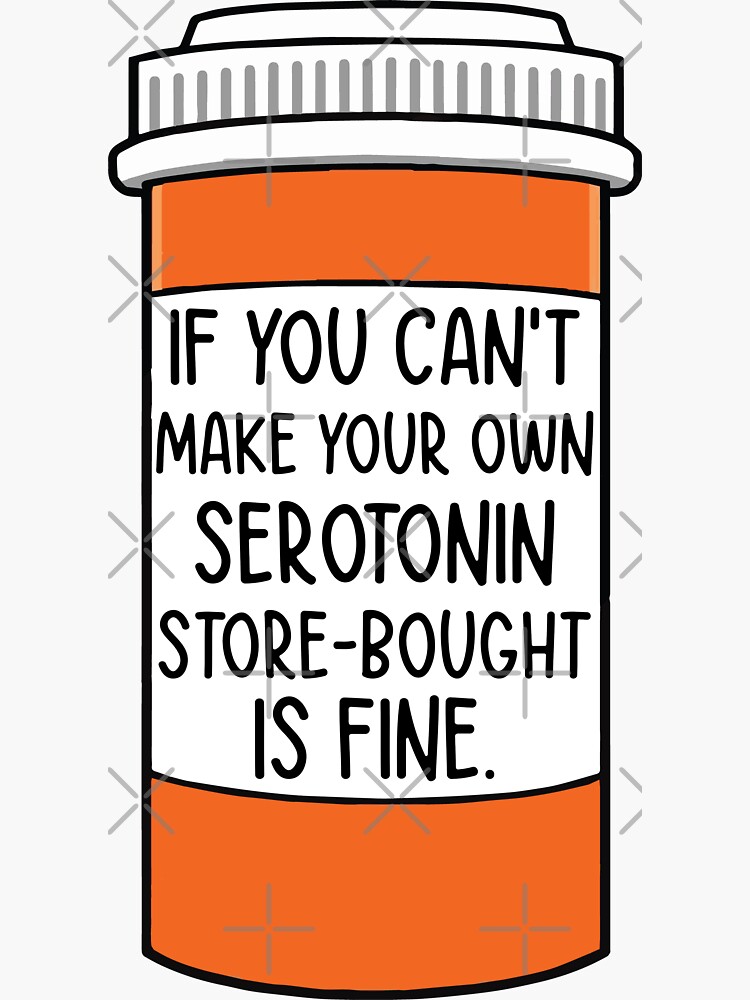
This strongly reminds me of depression and SSRIs, and the false explanation according to which people with depression have a serotonin deficit, and SSRIs work by increasing serotonin to normal levels. "Just like diabetics need insulin, depressed people need antidepressants", "if you can't make your own serotonin, store bought is fine", etc., there are a million memes like this one.

 if you can't make your own serotonin store-bought is fine Sticker

 Now, depression might, at least in a subset of patients, have something to do with serotonin, but the crude explanation above is almost certainly false. And when this falsity became more widely known, lots of depression patients who had been told this lie by clinicians felt deceived and betrayed. And then some clinicians said that this was obviously not meant to be taken literally, it was just a helpful story, a metaphor or myth. You even saw people victim-blaming their patients, suggesting that they should have understood that the simple neurotransmitter explanation wasn't supposed to be taken literally.

Look. When my very first psychiatrist prescribed me my very first antipsychotic pills (I think it was Fluanxol), I asked my very first psychologist - because she was the one I really talked to, and asked questions of - how antipsychotics work in the brain. The brain is such a big, complicated mess, thoughts and perceptions and emotions and all that stuff is also such a big, complicated mess - how can a pill possibly target the psychotic stuff only? The psychologist said it doesn't. She said treating psychosis with antipsychotics is more like hunting sparrows with a bazooka; you hope to kill some birds without tearing down too much of the forest. 
There are two things to say about the sparrow-bazooka metaphor here: First, it's obviously just a metaphor. Obviously, I don't have a literal forest with literal trees and literal sparrows flying around inside my brain. Second, it's blunt and honest. Did I feel disappointed at not getting a concrete, detailed, and reassuring neuroscience story about how the pills work? Yes, of course I did! Luck is 100% right when she says that people want to know why something works, not just that it often works and thus is worth trying. But at the same time, I truly appreciated my psychologist's blunt honesty.
When I first became a psych patient, I was pretty paranoid. Mostly about demon assassins, but also about clinicians. I suspected that they might still lobotomize people behind closed doors, even though they said it was a thing of the past, and I was scared to seek mental health care. It was only when a friend, who had been a patient there herself, vouched for them that I dared to reach out. I was still all kinds of jittery early on, but my psychologist's blunt honesty helped with that.  
And then, Fluanxol didn't work, so I got to try something else, and I had to go through this long trial and error with different pills before my psychiatrist finally struck gold with Haldol. This trial-and-error process was grueling, of course, but it would have been even worse if my psychologist had tricked me into believing that antipsychotics is a hard science and psychiatrists know exactly what they're doing. Now, I was at least somewhat prepared for how difficult and messy things can be. 

Yes, patients might be frustrated and disappointed if their clinician says they don't really know why something often works - it just does, and is therefore worth trying. They should still be honest! First, honesty is important in its own right. Treating people with respect, as equals, is important in itself, and telling people patronizing comforting lies is wrong in itself. Second, a strict consequentialist should still consider long-term consequences. I know that many clinicians like to believe that psychiatric patients never talk to other people, never read books on their own initiative and never uses the internet; they like to believe that they can fill the patient's head with whatever beliefs they like. But as the Andrew Cook quote above attest (and as everyone with two brain cells to knock together should realize), this isn't true. 
If clinicians lie to their patients, while telling themselves that they're not lying at all, they're just using myths and metaphors, the patients might feel better in the moment, but profoundly betrayed when they later learn they've been lied to. If you initially sold them a story of why something works, and they later learn that the story is false, it's pretty damn hard to switch to "oh, who cares why it works, as long as it does!" But if you're honest from the start - immediately tell them that we don't really know - lots of people might accept this, albeit, perhaps, begrudgingly. 

3. Could Feldman-Barrett's constructed emotions replace polyvagal theory? 

So, to repeat: my social media feed is currently full of therapists who wonder what they should replace polyvagal theory with, now that it's been debunked (or, alternatively, now when the age-old debunking finally gets the attention it deserves). My suggestion: Skip all this fucking neuroscience, which you're not experts on anyway. If a patient spontaneously brings up some neuroscience theory they read about and found helpful, sure, you can roll with that. But don't try to push a certain neuroscience theory on everyone. You can make do with just psychology. 

Therapists will say that patients need neuroscience to feel better. At least in our culture (roughly: modern, western and secular), people don't feel that their psychological problems are worth taking seriously unless they get a neuroscience story to go with them. Okay ... but if that is so, maybe you're job as a psychotherapist is to explain how wrong the premise is? Sure, you might be in the grip of a public health care system or insurance companies that demand a neuroscience story, and if so, you might have to feed them one to protect your patient. But you can still be honest about what you're doing when talking to said patient. 

But this seems really hard to accept for some therapists I've seen posting about the debunking of polyvagal theory. One suggested that they should replace this with Lisa Feldman-Barrett's constructed emotions - that's a much better neuroscience theory to push at patients!

Right. 

So, I read Feldman-Barrett's book "how emotions are made" years ago. I wanna stress that I don't have it fresh in my memory. But I do remember this much:

- She harshly criticizes research according to which there are various universal human emotions and universal facial expressions to go with them; she says these studies are seriously flawed.

- She instead proposes that all we have, pre-culturally and pre-linguistically, are high/low arousal and positive/negative valence. We don't have emotions before language and culture. Meaning that little children, non-verbal disabled people, or non-human animals, don't have emotions either. That's just projection.

I was, immediately, pretty negative when I read it. Then, I didn't really think about it for years ... until it popped up as a suggestion for which neuroscience theory therapists should push on their patients instead of polyvagal. I thought surely Feldman-Barrett must be scientifically controversial as well? I vaguely remember critics accusing her of just doing the strong Sapir-Whorf hypothesis all over again - language doesn't just influence but determine what you can think or feel - even though that has been debunked. 
Of course we're heavily influenced by language and culture, but the claim that there's nothing but high/low arousal and positive/negative valence until language and culture enter the picture is very strong. 

When trying to find the critique I was vaguely remembering, I found this instead , by Karolina Westlund, associate professor of ethology. Westlund freely admits to feeling personally offended by, for instance, Feldman's condescending tone and occasional sweeping, sloppy dismissals of researchers who don't agree with her. Still, Westlund's critique remains factual. 
A lot of it is evolutionary. An antelope who sees an approaching cheetah needs to have more than just high arousal plus negative valence to survive. Antelopes can't experiment with flight, fight, fawning etc. to see what works, they gotta fear cheetahs and flee right away. 

Feldman-Barrett, however, insists that animals don't feel fear, that's just anthropomorphizing. And this is so weird, because she also stresses that a good scientific theory must be able to account for all the data. Well, ethology used to proceed on the assumption that all non-human animals are quite simple. Ascribing emotions to them was a no-no (well, possibly not fear, possibly not everything, but researchers were really scared of anthropomorphizing!) But this was, eventually, a scientific dead end. Now, we have a huge body of research on, for instance, the fairly advanced cognitive and emotional lives of dogs and other non-human species. There's such a huge body of research that F-B must completely explain away if her theory is gonna hold up. It seems really implausible to me that this can be done. And I suspect (though I don't know much of this field) that the same is true for child psychology dealing with very small children - there's gonna be lots and lots of research that F-B must explain away if small children don't have emotions.

Westlund also cites some really weird claims that F-B makes in the book, such as how the Romans never smiled, because smiling with joy was only invented in the middle ages. Of course we don't have any evidence that the Romans never smiled. And although smiling with joy need not be universal, smiling to show benign intent likely is - our closest relatives do it! 


As far as I can tell, these are pertinent critiques. Plus, and now I'm getting thoroughly subjective, but the theory just didn't jive with me personally. I really don't recognize the experience of having bodily sensations and spontaneously sensing them as emotions. When I'm experiencing emotions, I tend to either don't experience them as located in any particular place, or, quite often, as being in my head. Note, I'm still talking about emotions, not thoughts, but they're in my head, not my stomach or chest or wherever they're supposed to be. 
I think they end up further down the body when I'm not really in touch with them, when I suppress them. I push them, so to speak, away from me (because I experience me as more in the head than the rest of the body, although the details vary over time). 

Years ago, when I was in a much worse place, I would sometimes get a racing pulse and constricted breathing. It would last for hours; when it finally subsided, I was, of course, exhausted. I told my then-psychiatrist that I had this annoying psychosomatic issue - I was certain all along that it was psychosomatic. 
He said I described an anxiety attack. I said no, that can't be right. I'm sure it's psychosomatic, but it's not anxiety - the only emotion I feel about it is annoyance. It's annoying that this thing keeps happening to me, and that I get so tired afterwards. 
Psych doc insisted it was anxiety and prescribed me betablockers for it (Propanolol), saying I should take 10-20 mg when this happened. They were absolutely ineffectual. I tried higher and higher doses until I took 140 mg at once, and still jack shit. I decided betablockers aren't for me and gave up.

This fall, I had a milder but still unpleasant sensation in my torso. Slightly tightened stomach muscles, slightly elevated pulse, and some hard-to-describe sensation precisely in the middle of the rib-cage. I figured it might be body-anxiety (as I've come to think of it), but if so, I didn't know what caused it. I tried to think of various possible stressors in my life to see if the sensation changed, became more intense, at any point - I thought if the sensation gets amped up when I think about X, then X is likely the cause. This diagnostic method didn't work. I thought about all the possible stressors, but the sensation stayed the same throughout. So I thought; nothing to do about it, then, except waiting for it to pass. Then, I went on a long conference trip, and once I was there, the sensation passed. I concluded it had been anxiety about the conference.

So, this is how I roll. When reading that book, I just felt that I don't fit into this framework at all. It seems to me that a therapist trying to use this theory with everyone would have a hard time fitting me into it. (I would also be pissed off at any therapist saying my dogs lack emotions.) But maybe I'm wrong; maybe Feldman-Barrett's theory is great. Which brings us to the following question:

 4. Should therapists push Feldman-Barrett on patients if we assume, for the sake of argument, that it is a great theory?

So. Let's assume, for the sake of argument, that F-B does have a great theory of emotionsand the theory is wielded by a therapist who's got the expertise to answer every critical question. Should the therapist, in these circumstances, push F-B's constructed emotions on all their patients? I still think they shouldn't. 

Suppose a patient talks about their terrible distress. The therapist says look, these are bodily reactions - high arousal plus negative valence - that you give a certain interpretation. But you could re-interpret them and move forward. We're the architects of our own experiences, like Lisa Feldman-Barrett says! As a matter of fact, emotions don't exist until we think about them and name them. There are no pre-cultural, pre-linguistic emotions.

The patient stares at the therapist in shock. She says: but what keeps me going is the thought of my son; he loves me, he needs me. I sometimes wanna end it all but then I think of my son and keep going. But now you're saying he doesn't love me, because he's got no emotions at all! He's only a year old! (Or, say, autistic and non-verbal.) Of course, he's got physical needs too, but anyone could fill those. If he doesn't have any emotional connection to me, if he doesn't have emotions at all, there's no point in struggling anymore!

Now, I've already stipulated, for the sake of discussion, that this is a great theory and that the therapist is an expert. So, let's say she's got a long answer to give as to why the theory doesn't have this implication (possibly having to do with the meaning of emotion, possibly F-B uses it in a much more narrow way than the patient ... possibly her son can have something which she calls emotion and that's fine). It seems, on the face of it, to have this implication, but actually, everything is fine. 

But even if the therapist is enough of an expert to explain all this, is it gonna be a simple enough explanation for a possibly uneducated patient to follow? In this story, the patient is clearly smart enough to spontaneously add two and two and draw out a (seeming) implication of the theory. But smart isn't the same as highly educated, and to understand more complicated theoretical stuff, you need education too. This is why you need to finish high school before you attend university, and take classes in a certain order while there. You can't just skip to the end of your university education, no matter how smart you are. So the patient might nod and smile (since she's not an ancient Roman, but a modern person, living centuries after the invention of the smile), while silently thinking to herself that her therapist said her son doesn't have any emotions, and now the therapist desperately tries to backpedal through a shitload of psychobabble.  

Now, someone might read this and think: Well, F-B's theory is good for most patients, since it fosters a sense of agency - we're the architects blabla - so I'll just continue to push it on most, while keeping silent about it for clients with strong feelings for a non-verbal child or a pet. But this is once again the fallacy of assuming psych patients don't talk to other people, don't read stuff of their own accord, and don't use the internet. 

Summing up: Stop pushing fucking neuroscience on psych patients because "it makes them feel better". If you're a psychologist, use psychology. You can still say that people can change. You can still talk about looping effects: how we interpret ourselves can affect the way we are going forward, which affects further interpretation, and so on. You can still talk about psychosomatic bodily stuff, even - without very detailed and/or controversial theories about the precise mechanisms. 

If a patient says they came across a neuroscience theory that was helpful to them, you can say good on you. If it's scientifically controversial, or even pseudoscience, you can say well, it's not literally correct, but if it's helpful for you to think this way, why not? (Being honest, not tricking patients into believing "useful myths".) 
If a patient says they came across a neuroscience theory that seems terrible - "I just read Feldman-Barrett to try to understand myself better, but she says my son has no emotions and doesn't love me!" - you could say either you don't have to interpret the theory that way (if that's a reasonable claim), or say it's scientifically controversial, you don't have to believe it. 

Only bring up neuroscientific theories if they're actually relevant. Either because the patient brings it up first, or because you really can't make do with just psychology. Even then, be honest about uncertainties and research gaps.  


Notes from a subhuman reptile creature

 Wow, long time no post - it was half a year ago! But I'm back on the blog now with some thoughts about madpeople as less than human.  O...